
Professional Carpentry and Joinery in Kent
Finding skilled carpentry and joinery in Kent is essential if you want building work that looks right, fits properly, and lasts over time. While carpentry and joinery are often grouped together, they play slightly different roles within building projects, and both are vital to achieving a high quality finish.
Working on homes across Kent, I regularly see how good carpentry underpins almost every successful building project. From structural elements through to detailed finishing, this type of work shapes how a home feels, functions, and holds up to daily use. I explain what carpentry and joinery involve, how they are used in residential projects, and why choosing experienced trades makes such a difference.
What carpentry and joinery involve
Carpentry generally refers to on site work that forms part of the structure or framework of a building. This can include floors, roofs, stud walls, and timber supports. Joinery, on the other hand, usually relates to more detailed woodwork such as doors, staircases, storage units, and fitted furniture.
In practice, many residential projects involve a combination of both. It provides the solid foundation that everything else relies on, while joinery adds the finishing detail that makes a space feel complete and well built.
Carpentry and joinery in home renovations
Carpentry and joinery play a major role in renovation projects. Older homes often require timber repairs, floor strengthening, or reworking layouts to suit modern living.
Our experience delivering full renovations shows that careful carpentry work early in the project helps prevent problems later. Straight walls, level floors, and properly supported structures allow plastering, fitting, and decoration to proceed smoothly.
Joinery also comes into play when renovating internal spaces, especially when adding storage, replacing doors, or updating staircases.
Structural carpentry and layout changes
When layouts change, carpentry is often at the centre of the work. Removing walls, creating openings, or altering room sizes requires accurate structural carpentry to ensure the building remains safe and stable.
Structural carpentry must meet current standards and is often inspected as part of building control. This work forms the backbone of projects such as extensions, conversions, and major internal alterations.
Getting this stage right is critical, as every later stage depends on the accuracy of the timber work beneath it.
Extensions and conversions
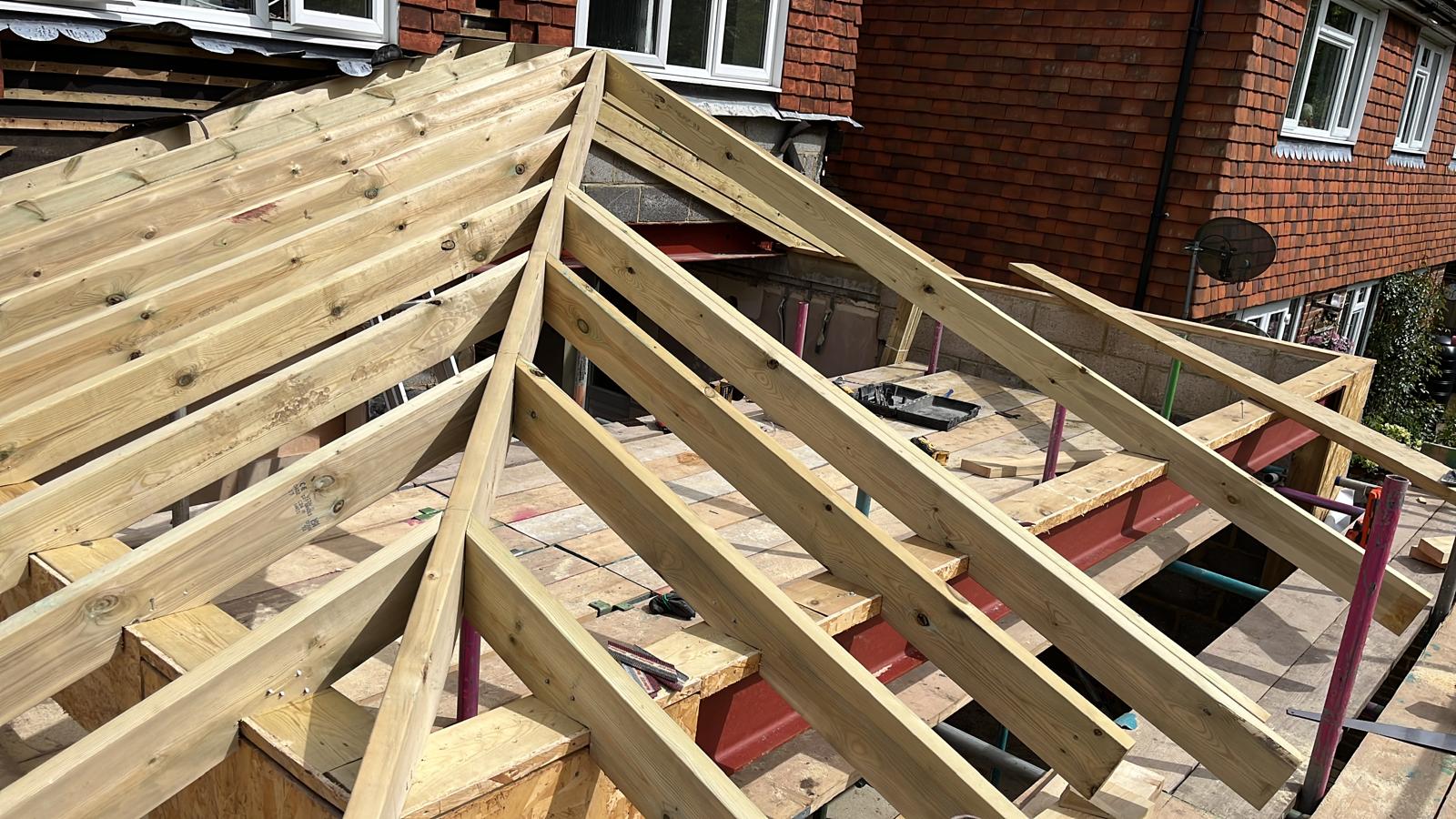
Extensions and conversions rely heavily on both carpentry and joinery. Timber framing, roof structures, and floor construction all require precision and experience.
Through our work on extensions and conversions, carpentry is carefully planned so new spaces integrate seamlessly with existing structures. Joinery then finishes those spaces with doors, storage, and detailed woodwork that matches the rest of the home.
These projects often involve inspections and must comply with current standards, which makes experienced trades essential.
Kitchens and fitted joinery
Kitchens are one of the most joinery heavy areas of a home. Units need to be fitted accurately so doors align, worktops sit correctly, and appliances function as intended.
Professional kitchen fitting relies on solid carpentry behind the scenes and precise joinery during installation. Even small inaccuracies can lead to visible gaps or long term issues.
Good joinery ensures kitchens feel solid and remain practical through years of daily use.
Bathrooms and moisture resistant carpentry
Bathrooms also require careful carpentry and joinery, particularly where moisture is involved. Floors, boxing, storage units, and door frames all need to be fitted with durability in mind.
During bathroom fitting, carpentry work supports fixtures and finishes while allowing for ventilation and access where required. Using the right materials and techniques helps prevent long term issues such as warping or movement.
Bespoke joinery and storage solutions
Joinery really comes into its own when creating bespoke solutions. Built in wardrobes, shelving, alcove units, and under stair storage all rely on accurate measuring and skilled fitting.
These features are often designed to maximise space and improve usability, especially in older homes where layouts can be awkward. Well executed joinery blends seamlessly into the home and adds both practical value and visual appeal.
Planning and compliance
While carpentry and joinery are often internal, they can still fall under regulations, particularly when they affect structure or fire safety.
If work involves altering layouts or adding space, it may be necessary to check requirements through the Planning Portal. Structural carpentry must also comply with Building Regulations, which ensure safety and performance standards are met.
Inspections carried out by Local Authority Building Control may be required depending on the scope of the work.
Health and safety in carpentry work
Carpentry involves cutting, lifting, and handling heavy materials, so safety is always a priority. Professional trades follow guidance from the Health and Safety Executive to manage risks on site.
Manual handling is particularly relevant when moving timber, boards, and fitted units. Following HSE Manual Handling Guidance helps reduce injury risk and ensures work is carried out responsibly.
A safe site not only protects people but also supports better quality workmanship.
The importance of sequencing
Good carpentry and joinery depend on correct sequencing within a project. Structural carpentry must be completed before plastering and fitting, while joinery is usually carried out towards the later stages.
When work follows the right order, finishes are cleaner and adjustments are minimised. This sequencing is especially important in larger projects where multiple trades are involved.
Seeing examples of quality carpentry and joinery
Looking at completed work helps homeowners understand the difference that skilled carpentry and joinery make. You can view our work to see examples of projects across Kent where timber work plays a central role in the finished result.
These examples highlight how good foundations and careful detailing come together.
Reviews and reassurance
Choosing the right trades is easier when you can see feedback from previous clients. We are fortunate that many customers have shared their experiences on AGC Carpentry & Building Services, and we have also added a widget on the website that displays them.
These reviews often mention the importance of workmanship, reliability, and attention to detail.
Aftercare and long term performance
Good carpentry and joinery should stand the test of time, but aftercare still matters. Timber can settle slightly as a home adjusts, and small refinements may be needed.
Our aftercare service ensures continued support after completion, helping maintain quality long after the work is finished.
Conclusion
High quality carpentry and joinery in Kent form the backbone of many successful building projects. From structural work through to detailed finishes, skilled timber work improves both the look and performance of a home.
If you are planning a project and want experienced advice, you can contact us to discuss your plans. At AGC Carpentry & Building Services, the focus is on careful workmanship, clear communication, and carpentry that enhances everyday living.