So, When Should I Hire a Joiner Instead of a Builder?
Knowing when to hire a joiner instead of a builder can save you time, money, and unnecessary complications on a project. The two roles overlap in places, which is why many homeowners are unsure who they actually need. In simple terms, a builder manages construction and structural work, while a joiner focuses on detailed timber work and finishing.
From working on projects across Kent, what actually tends to happen is people bring in a builder for a job that is mostly joinery, which increases cost and slows things down. On the other side, hiring a joiner for structural work can create safety issues or delays. Understanding the difference helps you choose the right approach from the start.
What does a joiner do
A joiner specialises in crafting and installing timber components, often working on detailed or precision tasks. This includes internal doors, staircases, fitted furniture, and custom woodwork.
Joinery is usually carried out in a workshop before being installed on site. This allows for a higher level of accuracy and finish compared to general construction work.
In practice, joiners are often brought in during the later stages of a project, once structural work is complete and spaces are ready to be finished.
What does a builder do
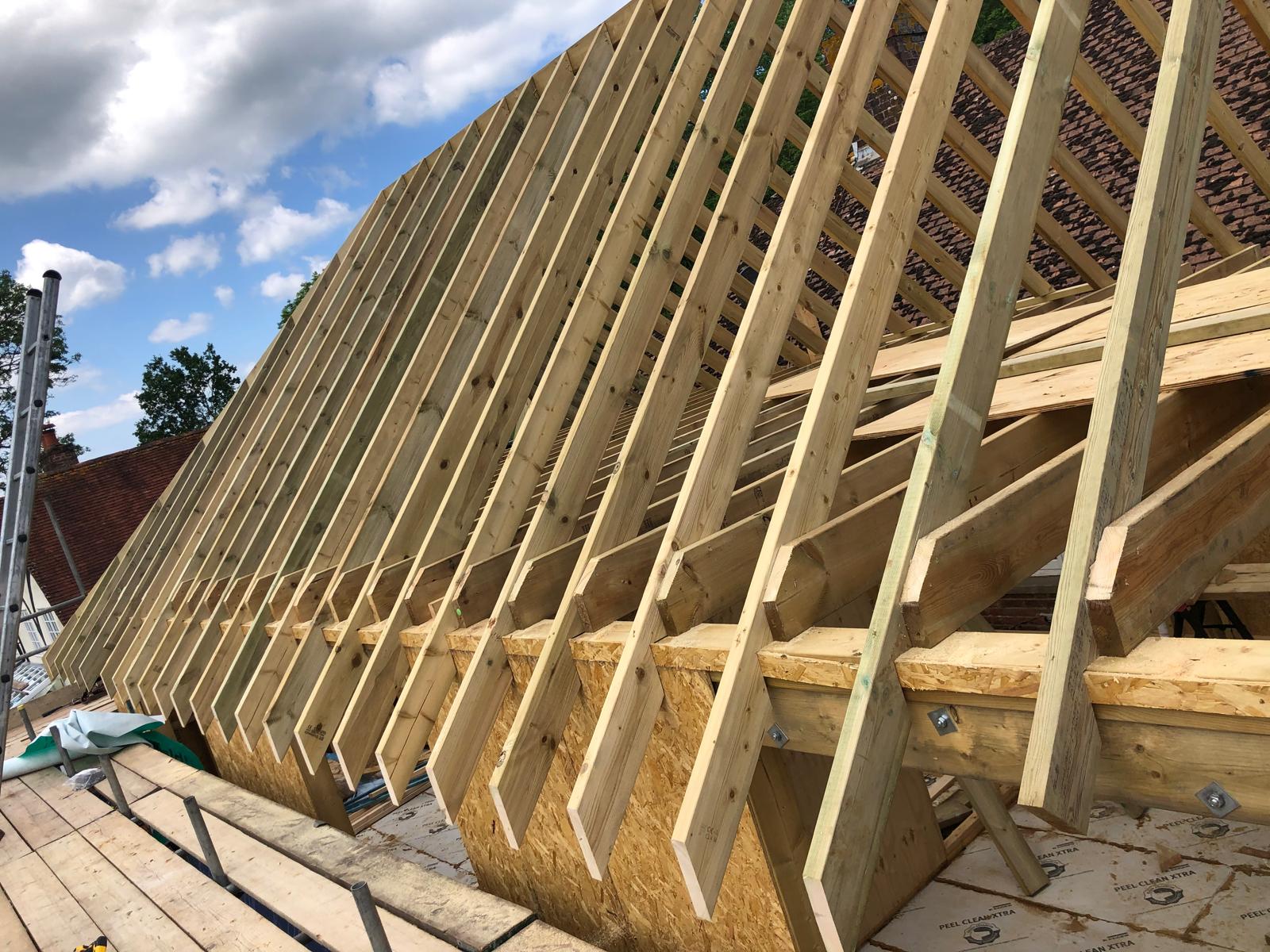
A builder focuses on the overall construction of a project. This includes structural work, layout changes, groundworks, and coordinating different trades.
Builders are responsible for making sure each stage of the project is completed in the correct order. This is especially important for larger projects such as full renovations, where multiple trades need to work together.
If your project involves structure, layout changes, or multiple trades, a builder is usually the starting point.
When to hire a joiner instead of a builder
You should hire a joiner instead of a builder when the work is focused purely on timber or detailed finishing. Common examples include:
- Installing internal doors or door frames
- Fitting skirting boards and architraves
- Building staircases
- Creating fitted wardrobes or storage
- Installing timber flooring
In these cases, bringing in a builder would add unnecessary cost because the work does not require full project management or structural expertise.
When a builder is still needed
If the work involves structural changes, a builder is still required. For example, removing walls, altering layouts, or adding new spaces all fall under building work.
Projects such as extensions and conversions require a builder to manage the overall process. A joiner may still be involved, but only for specific parts of the project.
A common mistake is assuming a joiner can handle everything. What actually tends to happen is the project stalls when structural work or approvals are needed.
Joiners in kitchen and bathroom projects
Joiners play an important role in kitchens, but they are usually part of a wider team rather than working alone.
Professional kitchen fitting involves a significant amount of joinery, particularly when installing units, worktops, and bespoke features. However, plumbing, electrics, and preparation work still require other trades.
Similarly, bathroom projects involve less joinery and more plumbing, so a builder or bathroom specialist is often more appropriate.
Building Regulations and approvals
If your project involves structural changes, you must comply with Building Regulations. These rules ensure the work is safe and meets current standards.
Inspections may be carried out by Local Authority Building Control during the build. Checking requirements early through the Planning Portal also helps confirm whether planning permission is needed.
Joinery work alone rarely requires these approvals, but once structure is involved, they become essential.
Cost differences between a joiner and a builder
Hiring a joiner is usually more cost effective for smaller, specialised jobs. Builders often charge more because they manage the entire project and coordinate multiple trades.
From experience, using the right professional for the job makes a noticeable difference to cost. Bringing in a builder for simple joinery work often increases the price without adding value.
On the other hand, using a joiner where a builder is needed can lead to rework and additional costs later.
Health and safety considerations
Both joiners and builders must follow safe working practices. Joinery work involves tools, cutting equipment, and lifting materials, while building work often includes structural risks and working at height.
Professionals follow guidance from the Health and Safety Executive to manage these risks. Manual handling is particularly relevant in both trades, which is why HSE Manual Handling Guidance is followed when lifting timber and materials.
Safety should always be prioritised regardless of the size of the job.
How to decide which you need
The simplest way to decide whether to hire a joiner instead of a builder is to look at the type of work involved.
If the work is structural, involves layout changes, or requires multiple trades, you need a builder. If the work is focused on timber, finishing, or detailed installation, a joiner is usually the right choice.
In many cases, both roles are required at different stages of a project.
Seeing examples of both types of work
Seeing real examples helps clarify the difference between building and joinery work. You can view our work to see how different projects are completed across Kent.
These examples show how builders and joiners work together to deliver finished spaces.
Reviews and reassurance
Choosing the right professional becomes easier when you can see feedback from previous clients. Luckily, we have had some of our previous customers leave amazing reviews on AGC Carpentry & Building Services, and we have also added a widget on the website which displays them.
Clear advice and using the right trade for the job are often highlighted in this feedback.
Aftercare and ongoing support
Even smaller joinery or building projects can require minor adjustments once completed. Doors may need slight realignment, or finishes may settle over time.
Our aftercare service provides continued support after completion, helping ensure everything remains in good condition.
Conclusion
Knowing when to hire a joiner instead of a builder comes down to understanding the type of work involved. Joiners are ideal for detailed timber work and finishing, while builders are essential for structural work and managing larger projects.
Choosing the right professional from the start helps avoid delays, reduces costs, and ensures the work is completed properly. If you are unsure which approach is best for your project, you can contact us to discuss your plans. At AGC Carpentry & Building Services, the focus is on practical advice, the right trade for the job, and work that is completed to a high standard.