So, Do I Need Party Wall Agreement for Building Work?
If you are planning building work that affects a shared wall or boundary, you may be wondering whether you need a party wall agreement. Many homeowners only discover party wall requirements once work is already being planned, which can cause delays if not handled early.
Working on renovation and extension projects across Kent, I often find that confusion around party wall agreements comes from not understanding when they apply and what they involve. We explain what a party wall agreement is, when you need one, and how it fits into wider building projects.
What is a party wall agreement
A party wall agreement is a legal agreement between neighbouring property owners. It is required under the Party Wall etc. Act 1996 when certain types of building work affect a shared wall, boundary, or structure.
A party wall is typically the wall that separates two attached properties, such as in semi detached or terraced houses. It can also include floors between flats or boundary walls built astride the property line.
The purpose of a party wall agreement is to protect both neighbours by setting out how work will be carried out and how potential damage will be managed.
When is a party wall agreement required
You may need a party wall agreement if your building work involves:
- Removing or altering a shared wall
- Cutting into a party wall to insert steel beams
- Extending up to or astride a boundary
- Excavating near a neighbouring property
For example, removing a structural wall that forms part of a shared boundary may require formal notice to your neighbour. Structural alterations carried out during larger renovations often trigger party wall requirements.
It is important to assess this early, as notice must usually be served before work begins.
Party wall agreements and extensions
Extensions are one of the most common reasons homeowners need a party wall agreement. Excavating foundations close to a neighbouring property or building up to a boundary can fall under the Act.
Projects involving extensions and conversions frequently require careful consideration of party wall matters. Even if planning permission is approved, the party wall process must still be followed separately.
The party wall agreement process does not replace planning permission or building regulations approval. It sits alongside them.
How the party wall process works
The process usually begins by serving a written notice to your neighbour, explaining the proposed work. If the neighbour agrees in writing, work can proceed once the notice period has passed.
If the neighbour does not consent, a party wall surveyor may need to be appointed. In some cases, each neighbour appoints their own surveyor, or both agree to use a single surveyor.
The surveyor prepares a party wall award, which sets out how and when the work will be carried out and records the condition of the neighbouring property before work starts.
Building Regulations and planning permission
It is important to understand that a party wall agreement is separate from planning permission and Building Regulations approval.
Planning permission, which can be checked through the Planning Portal, focuses on how the development affects the surrounding area. Building regulations focus on how the work is constructed.
Structural alterations and extensions are often inspected by Local Authority Building Control to ensure compliance. Even if these approvals are in place, you may still require a party wall agreement if the work affects a shared structure.
What happens if you do not get a party wall agreement
Failing to obtain a required party wall agreement can cause serious problems. Your neighbour may seek a court injunction to stop the work, which can delay the project and increase costs.
Additionally, if damage occurs and there is no agreement in place, disputes can become more complex and expensive to resolve.
Handling the party wall process properly protects both parties and reduces the risk of conflict.
Party wall agreements and structural changes
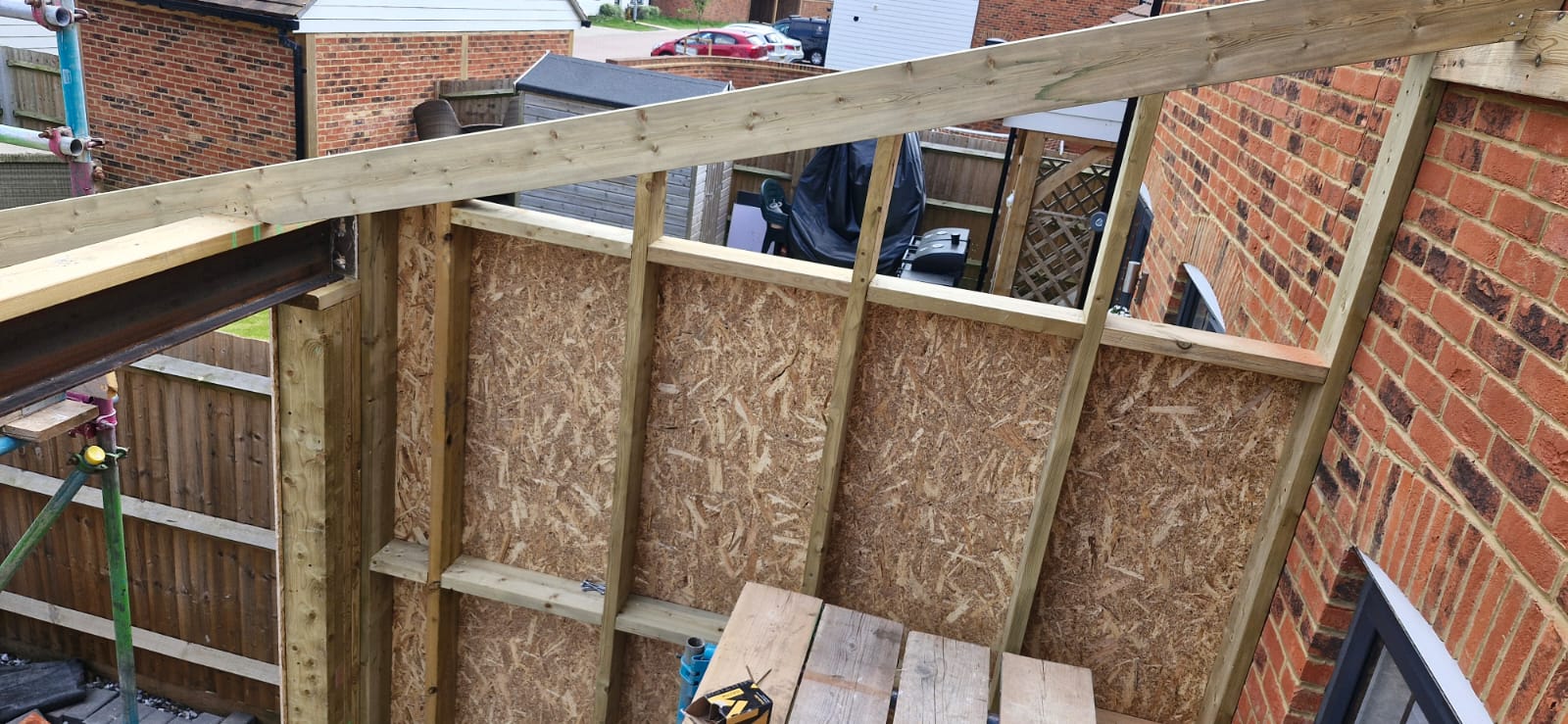
Structural changes are one of the most common triggers for a party wall agreement. For example, inserting a steel beam into a shared wall to create open plan space will usually require notice to be served.
Structural work must also comply with Building Regulations, and inspections may be required during construction. Coordinating party wall matters alongside structural approvals helps keep the project on schedule.
Early discussion with neighbours can often make the process smoother.
How long does the process take
The party wall process can take several weeks, depending on how quickly neighbours respond and whether surveyors need to be involved.
Because of this, it is important to factor party wall timing into your overall project plan. Starting the process early helps prevent delays once construction is ready to begin.
Clear communication with neighbours often speeds up the process.
Health and safety considerations
Work affecting shared walls often involves structural alterations, excavation, or heavy materials. Safety is therefore a key concern.
Professional builders follow guidance from the Health and Safety Executive to manage risks during construction. Manual handling is particularly relevant when installing structural supports, which is why HSE Manual Handling Guidance is followed.
Safe working practices protect both the construction team and neighbouring properties.
Practical advice before starting building work
Before beginning any work that might affect a shared wall, it is sensible to:
- Review your plans carefully
- Check planning requirements
- Confirm building regulations compliance
- Consider whether a party wall agreement applies
Discussing your plans with neighbours early can prevent misunderstandings and build goodwill before formal notices are served.
Viewing similar projects
Seeing how similar projects have been managed can help you understand what is involved. You can view our work to see examples of structural alterations and extensions completed across Kent.
Understanding the full process helps set realistic expectations.
Reviews and reassurance
Many homeowners feel more confident once they hear from others who have been through similar building work. Luckily, we have had some of our previous customers leave amazing reviews on AGC Carpentry & Building Services, and we have also added a widget on the website which displays them.
Clear communication and careful planning are often highlighted in this feedback.
Aftercare and support
Once work is complete, small adjustments may be needed as structures settle. Good aftercare helps address any minor issues promptly.
Our aftercare service provides continued support following completion, helping ensure the project performs as expected.
Conclusion
So, do you need a party wall agreement for building work? If your project affects a shared wall, boundary, or neighbouring structure, the answer is often yes. The party wall process protects both you and your neighbour and helps prevent disputes.
If you are planning building work and are unsure whether a party wall agreement is required, you can contact us to discuss your plans. At AGC Carpentry & Building Services, the focus is on careful planning, clear communication, and building work carried out properly from the start.