So, What Are the Best Materials to Use in a Bathroom?
When planning a new bathroom or updating an existing one, one of the most common questions people ask is, “what are the best materials to use in a bathroom?” With so many options available, it can be difficult to decide which materials are practical, long-lasting, and visually appealing.
Bathrooms are exposed to constant moisture, heat, and daily use, so the materials you choose must be durable, easy to clean, and resistant to water damage. At AGC Carpentry & Building Services, we have fitted and refurbished many bathrooms across Kent, and over time, we have learned which materials perform best.
Here we will look at the most reliable and effective materials to use in a bathroom, helping you make informed choices for your next renovation or extension project.
Understanding What Makes a Material Suitable for a Bathroom
Before choosing specific products, it helps to understand what makes certain materials better for bathrooms than others. A good bathroom material should be:
- Moisture-resistant: Able to withstand steam and humidity without warping or discolouration.
- Durable: Resistant to scratches, stains, and general wear over time.
- Easy to clean: Smooth, non-porous surfaces that do not trap dirt or bacteria.
- Aesthetic: Suitable for the design style you want, whether modern, classic, or natural.
- Safe: Slip-resistant flooring and non-toxic finishes to maintain hygiene and comfort.
Each area of a bathroom, from walls and floors to worktops and cabinetry, requires materials that meet these standards.
Flooring Materials for Bathrooms
Bathroom flooring experiences the most moisture and traffic, so it needs to be strong, non-slip, and easy to maintain. Some of the best materials to use in a bathroom for flooring include:
Ceramic or Porcelain Tiles
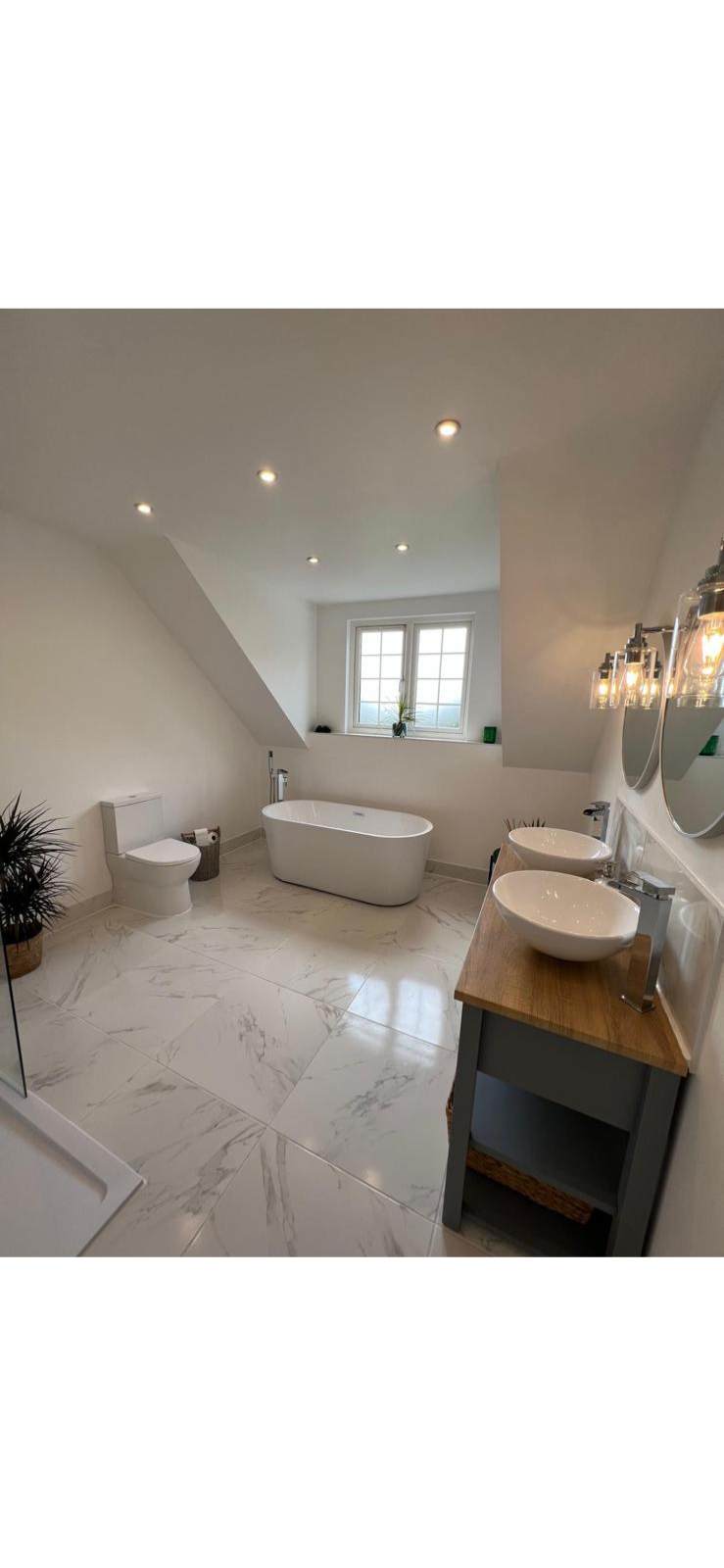
Tiles remain the most popular choice for bathroom floors. Porcelain tiles are denser and more water-resistant than standard ceramic ones, making them ideal for wet areas. They come in a wide range of designs, from stone and wood effects to sleek contemporary finishes.
Vinyl Flooring
Modern vinyl flooring is affordable, waterproof, and available in many styles. It feels softer underfoot compared to tiles and can mimic natural stone or wood. It is also low-maintenance and ideal for family bathrooms.
Natural Stone
Stone such as marble, limestone, or slate provides a luxury finish and exceptional durability. However, it requires sealing to prevent water absorption and can be more expensive to install. It is best suited to larger bathrooms where aesthetics are a priority.
Engineered Wood
Traditional wood flooring is not ideal in damp conditions, but engineered wood offers a better alternative. Its layered design reduces movement from humidity, providing the look of timber with improved resistance to moisture.
Wall and Surface Materials
Walls in a bathroom must handle moisture while maintaining an attractive appearance. Some of the most effective materials for bathroom walls include:
Ceramic Tiles
Like flooring, ceramic wall tiles are durable, waterproof, and easy to clean. They are especially effective in showers and behind sinks where splashes are frequent. Glossy finishes reflect light well, helping small bathrooms feel larger.
Waterproof Paint
High-quality bathroom paint provides a moisture-resistant layer that prevents mould growth. It is an ideal choice for walls that are not directly exposed to water, such as above tile lines or on ceilings.
Wall Panels
A growing trend in modern bathrooms, wall panels made from acrylic or PVC provide a seamless, low-maintenance surface. They are completely waterproof and can be installed over existing walls, reducing labour time.
Natural Stone or Quartz
For a more refined look, materials such as quartz or granite can be used for feature walls or shower surrounds. These surfaces are hardwearing, visually striking, and easy to maintain with the right sealant.
Worktops and Vanity Units
Bathroom worktops face frequent water exposure, so materials need to be resilient and non-porous.
- Quartz: A composite material made from natural stone and resin, quartz is strong, water-resistant, and available in many colours and finishes.
- Granite: Natural granite is durable and long-lasting, but it should be sealed to prevent water damage.
- Solid Surface (such as Corian): Smooth and seamless, it resists mould and stains, making it ideal for modern bathrooms.
- Laminate: A budget-friendly option that offers plenty of style choices but needs to be carefully installed to prevent water from reaching the edges.
If you are considering a full bathroom redesign, working with experienced professionals can help ensure materials are fitted properly. We have completed many bathroom fitting and renovation projects across Kent, where the right combination of design and practicality achieved excellent long-term results.
Choosing the Right Cabinetry and Storage
Bathroom furniture and storage solutions should be both functional and moisture-resistant. MDF and particleboard tend to absorb water, so opt for solid wood or high-quality waterproof laminates.
Bespoke joinery can be particularly effective, allowing you to maximise space in smaller bathrooms while using durable materials. We often combine carpentry expertise with waterproof finishes to build custom vanities and shelving that fit perfectly into each layout.
Many bathroom upgrades also form part of wider extensions and conversions, where a new layout can create the space needed for an ensuite or modern family bathroom.
Fixtures and Fittings
Everyday fixtures like taps, handles, and showerheads are small details that affect both durability and design. Stainless steel and brass are excellent choices because they resist rust and corrosion. Chrome finishes remain popular for their modern, reflective appearance, while brushed nickel provides a more subtle, elegant look.
When it comes to baths and basins, acrylic is the most common option. It is lightweight, affordable, and retains heat well. For a more luxurious feel, stone resin or cast iron baths provide greater durability and weight but come at a higher cost.
Lighting and Ventilation
Although not a material, lighting and ventilation play a huge role in maintaining the condition of your bathroom materials. Poor ventilation can cause condensation, which leads to mould growth and damage. Installing an extractor fan and ensuring proper airflow helps protect every surface.
LED lighting is another smart investment. It is energy-efficient, long-lasting, and suitable for damp environments when rated for bathroom use.
Combining Durability with Design
When choosing the best materials to use in a bathroom, it is important to balance practicality with style. For example, combining porcelain tiles with quartz worktops can create a modern, easy-to-clean space, while natural stone paired with solid wood adds warmth and character.
It is also worth considering your lifestyle. Families may prefer durable, low-maintenance finishes, while those renovating a guest ensuite might prioritise design features over practicality.
Sustainability and Long-Term Value
More homeowners are now choosing sustainable materials for their bathroom projects. Bamboo, reclaimed wood, and recycled glass are becoming popular because they reduce environmental impact while maintaining quality.
We always encourage clients to invest in materials that will last. Although cheaper alternatives can seem appealing initially, high-quality surfaces require less maintenance and remain in better condition for longer.
If you would like to see examples of how we combine sustainability, practicality, and modern design, take a look at our work.
Why Professional Installation Matters
Even the best materials can underperform if they are not installed properly. Gaps, uneven tiling, or poor sealing can lead to leaks and long-term damage.
Our team at AGC Carpentry & Building Services has extensive experience fitting bathrooms across Kent, ensuring every element is measured, sealed, and finished to a professional standard. Correct installation not only improves appearance but also extends the life of your investment.
Luckily we have had some of our previous customers leave amazing reviews on our Google My Business profile, and we have added a widget on our website that displays them. Our Google profile is here.
Conclusion
So, what are the best materials to use in a bathroom? The ideal choices depend on your design goals, budget, and how much maintenance you are willing to do. Porcelain tiles, quartz worktops, and high-quality laminates offer excellent durability and moisture resistance, while natural materials like stone and wood can add warmth and style when properly sealed.
By selecting practical, well-fitted materials and working with experienced professionals, you can create a bathroom that looks beautiful and stands up to everyday use.
If you are planning a bathroom renovation or new installation, you can contact us to discuss your project and get expert advice on material choices that suit your home and budget.