So, How Long Does Building Work Usually Take?
If you are planning a project, one of the first questions is how long does building work take. The honest answer is that timelines vary depending on the type of work, the condition of the property, and how well the project is planned.
From working on projects across Kent, what actually tends to affect timelines most is not the size of the job, but how many unknowns are involved. A well planned project with clear decisions can move quickly, while even a smaller job can take longer if changes are made during the build.
We explain typical timeframes for different types of building work and what influences how long your project will take.
Typical timelines for common projects
Different types of building work come with different expected durations.
Small jobs, such as minor carpentry or repairs, may take a few days to a week. Medium sized projects, such as kitchen or bathroom installations, usually take one to three weeks depending on complexity.
Larger projects, including full renovations, often take several months. These involve multiple stages and trades, which increases the overall timeline.
In practice, what we often see is that combining several jobs into one project can actually be more efficient than completing them separately.
How long extensions take
Extensions are one of the most common types of building work, and they typically take between eight and sixteen weeks depending on size and complexity.
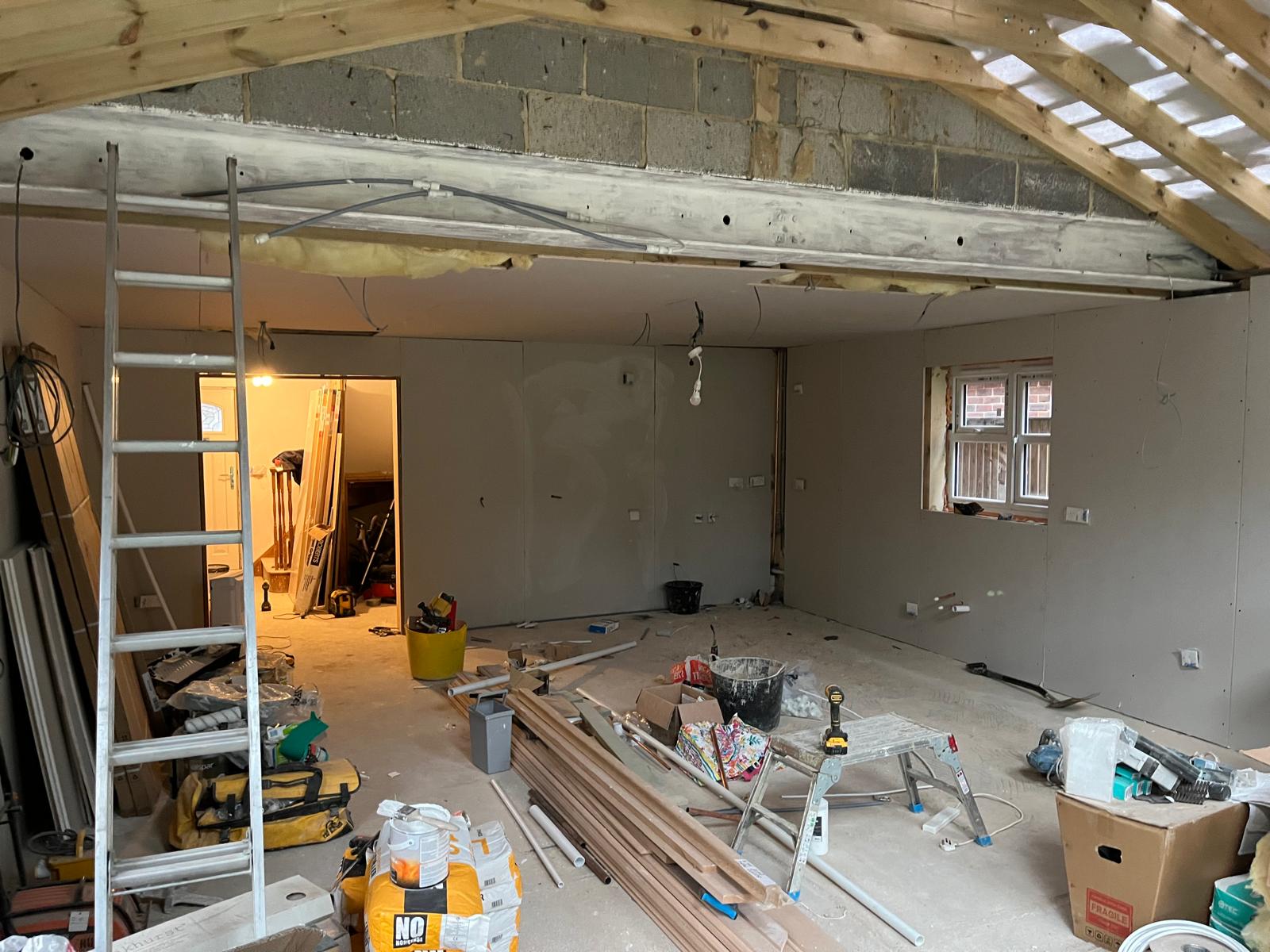
Projects involving extensions and conversions require several stages, including groundwork, structure, roofing, and finishing.
What actually tends to determine how quickly an extension progresses is how well each stage is planned. Delays often occur when materials are not ready or when decisions are made during construction.
Kitchen and interior projects
Kitchen installations are usually quicker than structural work, but they still require careful coordination.
Professional kitchen fitting typically takes one to two weeks for a standard installation. However, if the project includes structural changes or forms part of a larger renovation, the timeline will increase.
In practice, preparation work often takes as long as the installation itself.
Structural work and alterations
Structural changes, such as removing walls or installing beams, usually take several days to a few weeks depending on complexity.
Although the physical work can be completed relatively quickly, planning, approvals, and inspections add to the overall timeline.
All structural work must comply with Building Regulations, and inspections may be carried out by Local Authority Building Control.
Checking requirements early through the Planning Portal helps avoid delays before work begins.
What causes delays in building projects
From real project experience, delays usually come from a few key areas rather than the construction itself.
One of the most common causes is late decision making. Changing layouts, materials, or finishes during the build almost always extends the timeline.
Another common issue is discovering unexpected problems, such as structural defects or outdated wiring, once work has started.
Weather can also affect external work, particularly during winter months.
The role of planning in timelines
Planning is the most important factor in determining how long building work takes. Projects that are fully planned before starting tend to run more smoothly.
This includes confirming designs, ordering materials, and scheduling trades in advance. What actually tends to happen on well planned projects is that each stage flows into the next without unnecessary delays.
Poor planning, on the other hand, often leads to gaps between stages and extended timelines.
Working around your daily life
Building work often needs to be planned around daily routines. Larger projects may require temporary changes to how you use your home.
In practice, what we often see is that disruption is highest at the beginning, particularly during structural work and demolition. As the project progresses, disruption usually reduces.
Understanding this helps set realistic expectations.
Health and safety considerations
Safety plays a role in how quickly work can be completed. Builders must follow safe working practices, which sometimes affects the pace of the project.
Professional builders follow guidance from the Health and Safety Executive to manage risks. Manual handling is particularly important, which is why HSE Manual Handling Guidance is followed when moving materials.
Safe working practices help prevent delays caused by accidents or issues on site.
What actually determines the timeline
From experience, the main factors that determine how long building work takes are:
- The size and complexity of the project
- The level of planning before work begins
- Availability of materials and trades
- Whether changes are made during the build
- Weather conditions for external work
What actually tends to matter most is preparation rather than the type of project itself.
Viewing completed projects
Seeing completed projects helps put timelines into perspective. You can view our work to see how different types of building work have been delivered across Kent.
These examples show how planning and coordination affect overall timelines.
Reviews and reassurance
Choosing the right builder plays a major role in how efficiently a project runs. Luckily, we have had some of our previous customers leave amazing reviews on AGC Carpentry & Building Services, and we have also added a widget on the website which displays them.
This feedback highlights reliability, communication, and consistent project management.
Aftercare and final stages
Once building work is complete, small adjustments may be needed as materials settle or as the space is used.
Our aftercare service provides continued support after completion, helping ensure everything remains in good condition.
Conclusion
So, how long does building work take? Timelines can range from a few days for small jobs to several months for larger projects. The biggest factor is how well the project is planned before work begins.
Clear decisions, proper preparation, and working with experienced professionals all help keep projects on track. If you are planning building work and want a clearer idea of timelines for your project, you can contact us to discuss your plans. At AGC Carpentry & Building Services, the focus is on efficient planning, clear communication, and projects that run smoothly from start to finish.