There is no law that says a homeowner must take out special insurance before renovation work, but you do need to make sure the insurance you already have still covers your home while the work is going on. For most people that means telling your home insurer before structural work starts, checking what your policy excludes while the house is a building site, and checking that your builder carries the right insurance of their own.
Skip that step and the risk is not a fine but a claim that goes unpaid. Which? reports that any structural work, such as building an extension or fitting a new kitchen, needs to be declared to your insurer, and that failing to do so could invalidate your buildings insurance. This guide covers what to tell them, what to look for in the policy, the builder's side of it, and what to update once the work is finished.
Why building work changes your insurance
A home insurance policy is priced on the house as the insurer understands it. Building work changes that picture. Walls come down, roofs are opened, scaffolding goes up, people you do not know are working on the property and materials sit on the drive. The risk of fire, escape of water, theft and storm damage goes up while the work is happening, and the house itself is a different building when it is finished.
The law puts the duty on you to answer the insurer's questions honestly. Section 2 of the Consumer Insurance (Disclosure and Representations) Act 2012 says it is the duty of the consumer to take reasonable care not to make a misrepresentation to the insurer. If your policy or your renewal asks about building work and you say there is none, or the policy terms require you to tell them about structural work and you do not, the insurer can have grounds to reduce or refuse a claim, even one that has nothing to do with the building work itself.
What counts as work you need to declare
Cosmetic jobs such as decorating, new carpets or a few shelves are not usually something an insurer needs to hear about. Work that affects the structure is, and in practice that covers most of what people mean by a renovation.
- an extension or a loft or garage conversion
- removing or altering a wall, particularly a structural wall
- a new kitchen or bathroom where walls, plumbing or wiring change
- roof work, new windows or doors, or anything that needs scaffolding
- any period when the house will be empty while the work is done
If you are not sure whether something counts, ring the insurer and ask. Make a note of the date and the name of the person you spoke to, and ask them to confirm in writing.
What to check in your own policy
When you call, ask the questions that matter for your project rather than simply reporting it.
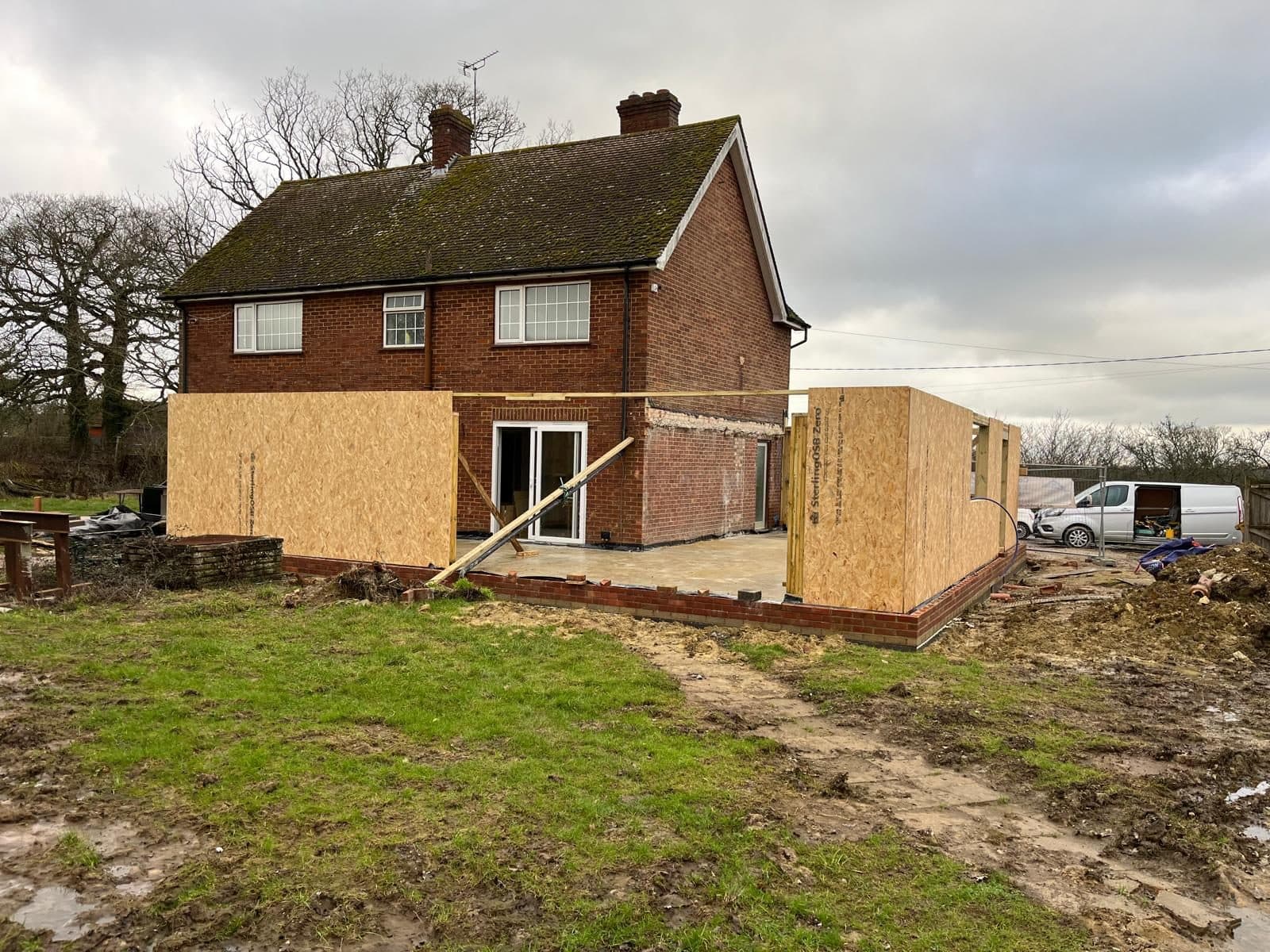
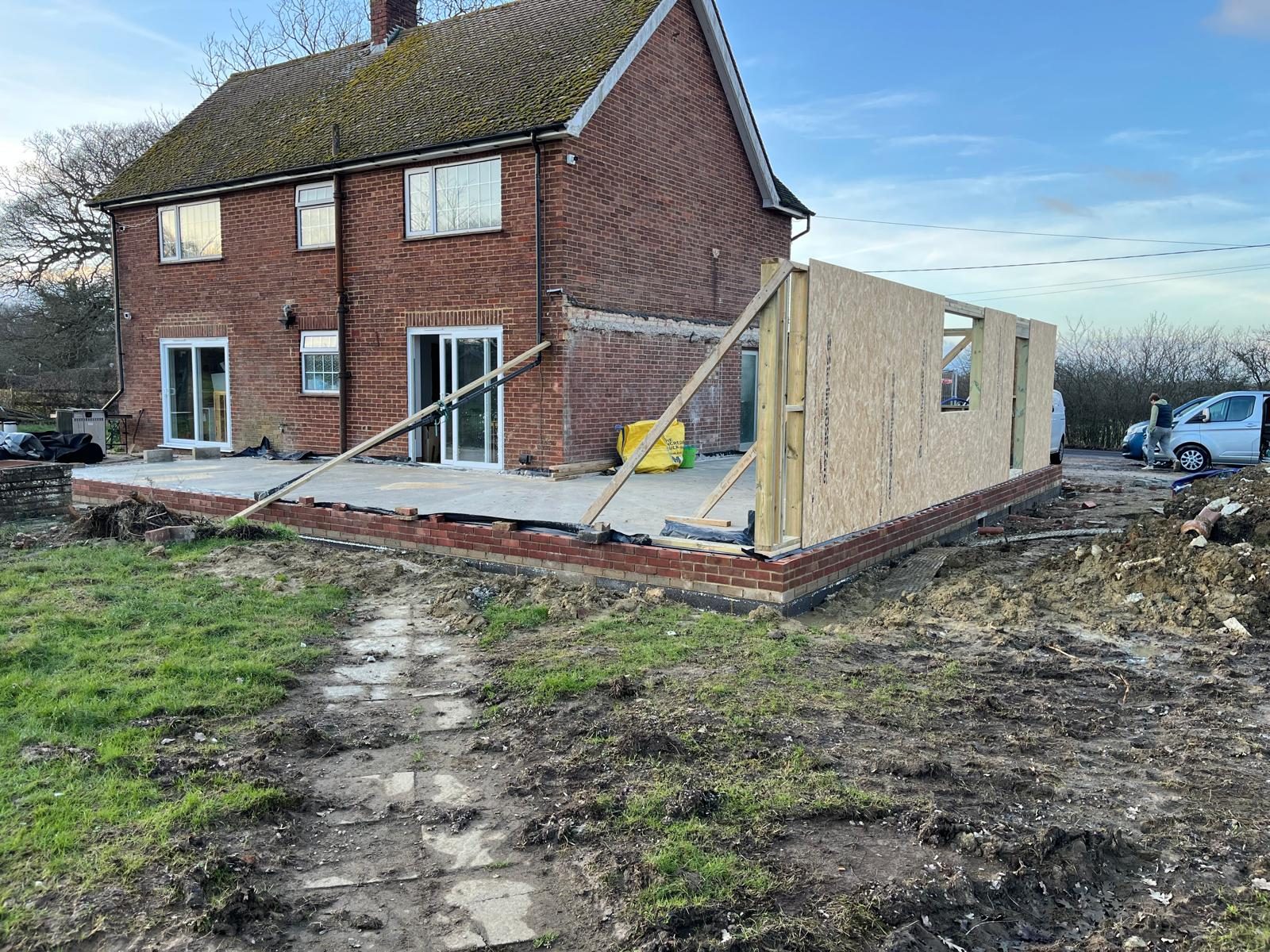
Unfinished work. Some policies exclude damage to an extension or alteration until it is finished. Which? gives the example of a buildings policy that excludes storm or flood damage to unfinished extensions or alterations. That matters most in the stage when the house is open to the weather. The timber frame extensions on our work page show what that stage looks like, with the frame going up from the slab and the house behind it waiting for the shell to be made watertight.
Accidental damage. Which? found that only 31% of buildings policies include accidental damage cover as standard. A dropped tool through a window or a nail through a pipe is exactly the kind of thing that cover is for.
An empty house. If you plan to move out while the work is done, check the policy's limit on leaving the home unoccupied. Which? says many policies cap it, often at no more than 60 days, and cover can be reduced or stop altogether after that. Our guide to whether you can live at home during a renovation may help you decide whether you will need to.
Contents and materials. Furniture moved into a garage or a storage unit, and materials delivered to site before they are fitted, may not be covered where they sit. Ask about both.
If your insurer will not cover the work, or will only do so on terms that do not suit the project, specialist renovation policies exist. Which? notes that some insurers and brokers offer policies designed for renovation work, which can cover the existing structure, the new work and materials on site. It is far easier to sort this out before work starts than to find a new insurer once the roof is off.
Your builder's insurance
Your own policy covers your house. Your builder's insurance covers the damage they might do and the people they employ, and it is a separate thing to check.
Public liability insurance covers injury to other people and damage to their property, which includes you, your neighbours and your house. It is not a legal requirement, but a builder working without it leaves you exposed if something goes wrong, which is why our guide to whether builders need public liability insurance recommends asking to see the certificate.
Employers' liability insurance is a legal requirement for any builder who employs staff. The government's guidance on employers' liability insurance says an employer must have cover of at least £5 million from an authorised insurer, and can be fined £2,500 for every day they are not properly insured.
Ask for both certificates before work starts, check the dates and the name on them match the business you are hiring, and keep copies. It belongs alongside the other questions to ask a builder before hiring, and it is part of how you know a builder is reliable. Your insurer may ask for the builder's details as well, so have them ready when you call.
When the work is finished
Once the work is complete, ring the insurer again. An extension, a converted loft or garage, or a new kitchen can change the number of rooms, the value of the contents and, most importantly, the cost of rebuilding the house.
Buildings insurance is based on that rebuild cost, not on what the house would sell for. If the rebuild figure on your policy has not caught up with the work, you risk being underinsured, which Which? suggests avoiding by reviewing your buildings cover once the work is done. The BCIS rebuild calculator is the usual free starting point for working out a new figure. Our guide to how much value an extension adds to a house covers the market value side, which is a different number.
Keep the paperwork together as well. The building control completion certificate, any electrical and gas certificates, the builder's details and your receipts are what an insurer, a buyer or a surveyor will ask for later. Our guide to whether you need building regulations approval explains where the completion certificate comes from.
Before the work starts
Preparing your insurance is one part of preparing your home for building work, and it is best done about the same time as you agree the start date. A short checklist covers most projects.
- tell your insurer what the work is, when it starts and how long it should take
- ask about unfinished work, accidental damage, an empty house and materials on site
- get your builder's public liability and, if they have staff, employers' liability certificates
- arrange specialist cover if your insurer will not extend your policy
- update the rebuild figure and the contents once the work is finished
Conclusion
You do not usually need a new policy for home renovation work, but you do need to tell your existing insurer about any structural work before it starts, check what the policy excludes while the work is under way, and update it when the work is done. Check your builder's public liability insurance, and their employers' liability insurance if they employ anyone. A few phone calls before the start date are what keep a claim from being refused later.
If you are planning an extension or conversion, a renovation or a new kitchen in Kent, AGC Carpentry & Building Services is based in Ashford and works across the county, including Maidstone, Canterbury, Folkestone, Hythe and Dover. You can see recent projects on our work page and read about our aftercare, and contact us to talk through what your project involves.