Yes, you can live at home during renovations, and most people do. Whether it is sensible depends less on the size of the project than on four practical things. Do you still have a working kitchen, do you still have a usable bathroom, are the water, heating and power staying on, and can you keep the dust out of the space where you sleep and eat. If the honest answer to those is yes, staying put is usually the cheaper and easier choice. If the work takes out your only kitchen and bathroom at once, cuts the services for days, or involves the roof coming off, moving out for that phase is often the better decision.
The useful way to think about it is room by room rather than project by project. A single room renovation, which is what most UK home improvements actually are, rarely forces anyone out. The median UK renovation budget sits at around £10,000 according to the 2026 UK Houzz & Home Study, which tells you that the typical job is one room or one problem, not a whole-house rebuild. It is the whole-house rebuild, or the job that happens to knock out both of your essential rooms together, that changes the answer. So before deciding, work out exactly which rooms are affected, for how long, and whether the services feeding the rest of the house run through the work zone.
The four things that actually decide it
Everything comes back to the same short list.
- Kitchen. Losing your only cooking and washing-up space is the single biggest disruption in most homes.
- Bathroom. One bathroom going offline is manageable for a few days and miserable for a few weeks.
- Services. Water, heating, gas and electricity being isolated is fine for hours, hard for days.
- Dust and safety. Fine dust travels, and in older properties there are materials you do not want disturbed while you are living alongside them.
If a project only touches one of these, staying is straightforward. If it touches three or four at once, that is usually the signal to move out for the disruptive phase, even if only for a week or two.
The projects you can usually stay for
Most renovation work falls into the stay-put category. A single bathroom refit, a bedroom or living room, redecoration, flooring, rewiring done room by room, and most fitted joinery can all be lived around with sensible planning.
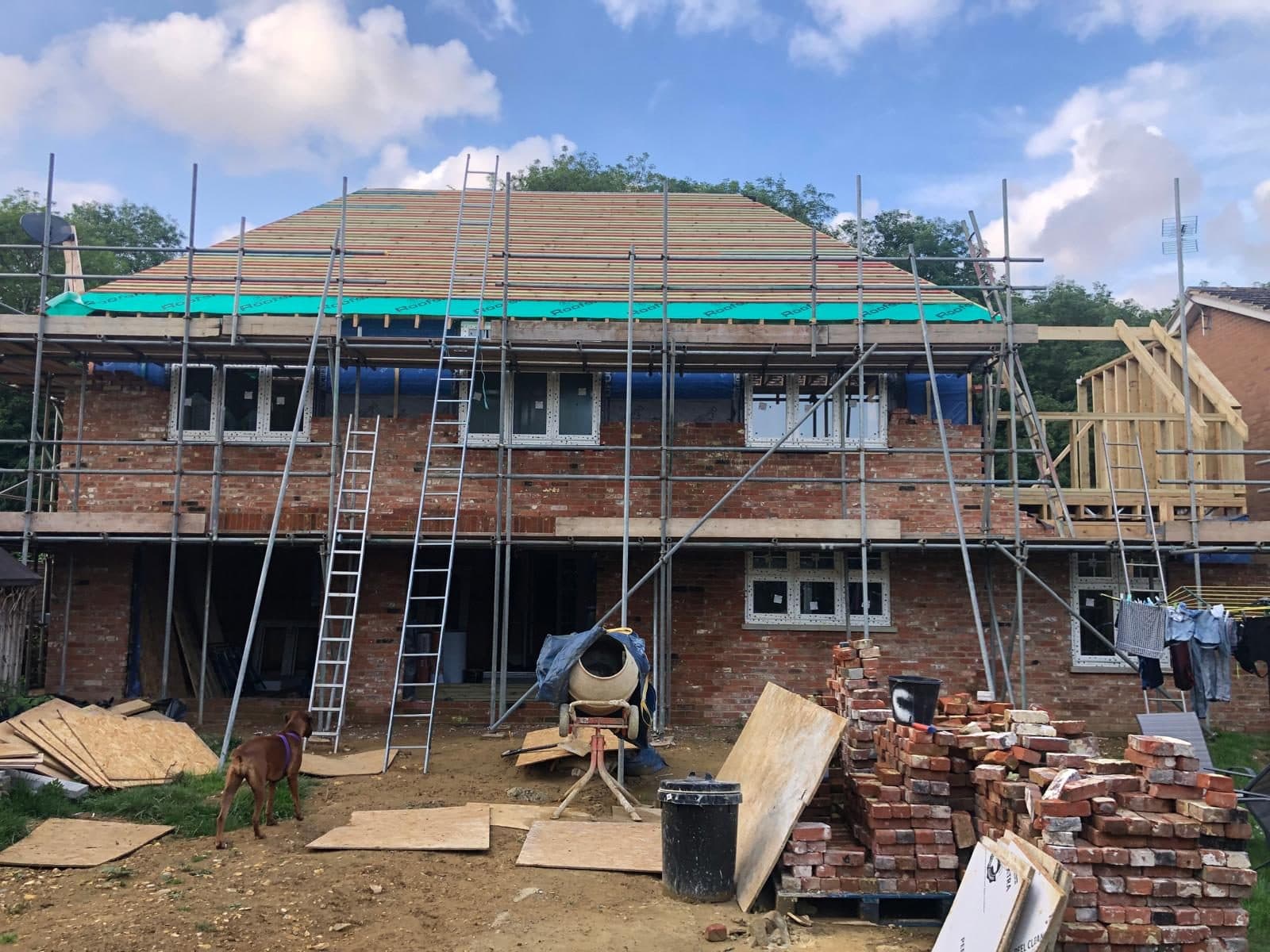
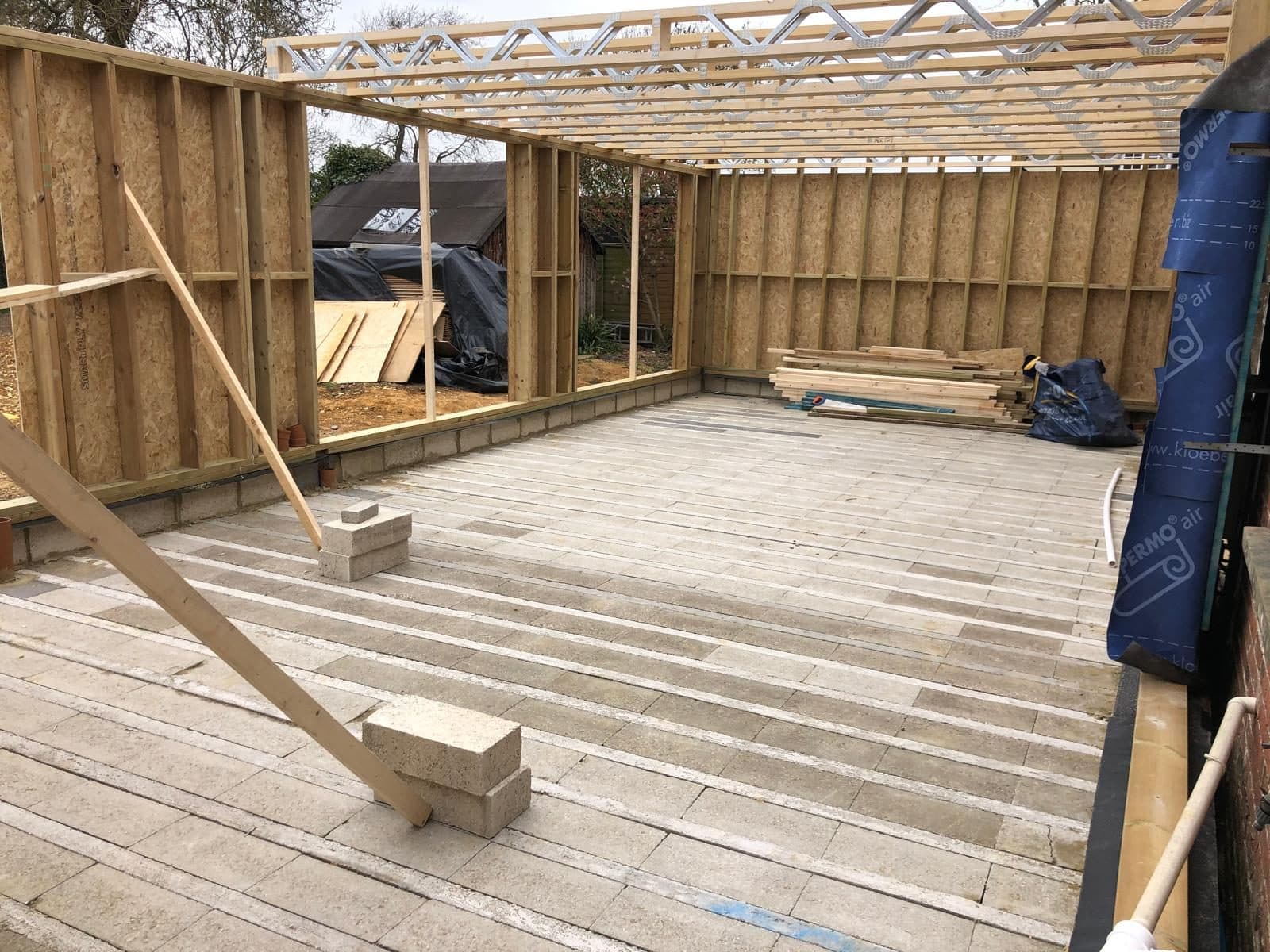
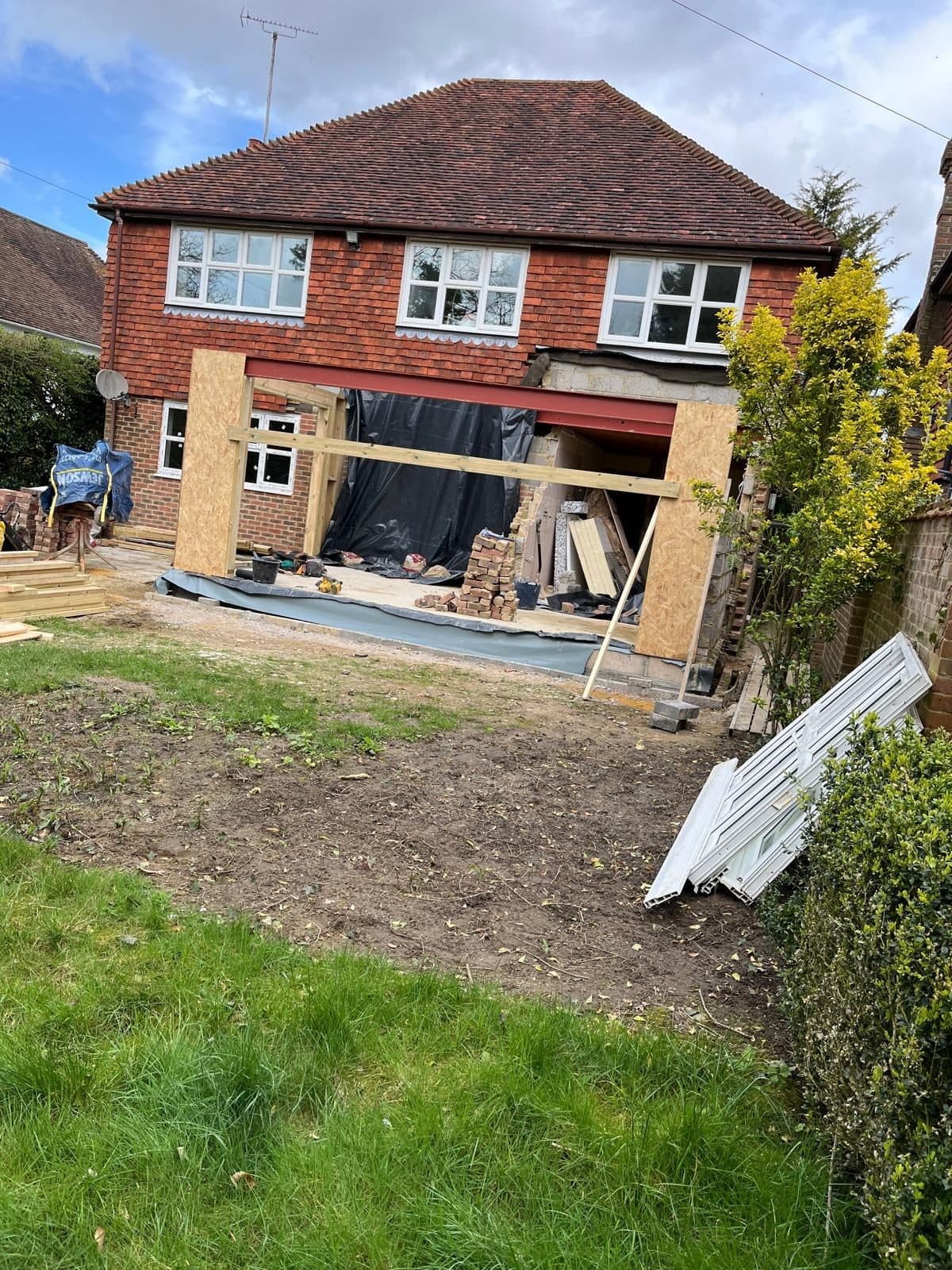
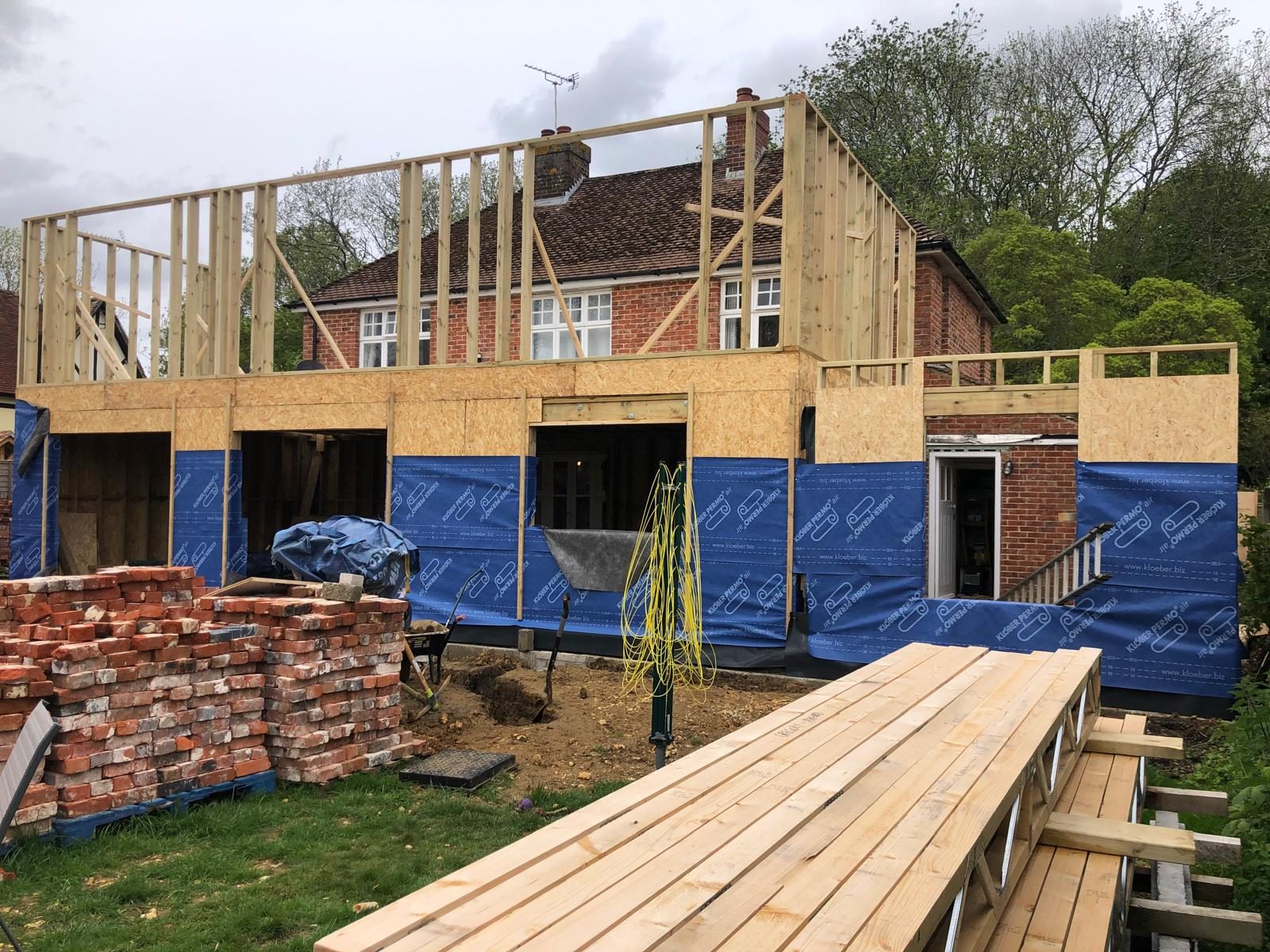
Extensions and conversions are the ones people worry about most and often the easiest to live through. A rear extension or a loft conversion is built largely outside or above your existing sealed house, and the disruptive breakthrough into the existing structure usually happens late in the programme and only lasts a short time. For much of the build, your house carries on functioning behind a wall that has not been opened yet.
In our experience, staying in the house and sealing the work zone off properly works better than trying to live around an open project because a solid temporary partition and a single dust-controlled route in and out keeps the mess to one area, whereas an open, unsealed project spreads fine dust through the whole house within days and undoes any attempt to keep a clean space. The partition costs very little. The alternative costs you every soft furnishing in the building.
The projects where moving out is usually wiser
Some jobs genuinely are not worth living through. A whole-house renovation where every room is in progress at once, a job where all the services are being replaced together, or anything involving structural work such as removing the roof, underpinning, or taking out load-bearing walls across the ground floor, tends to mean there is no functioning refuge left in the property.
The deciding factor again is whether an essential room survives. If the programme leaves you with a working kitchen or bathroom and somewhere clean to sleep at every stage, you can usually stay. If there is a two week window where none of those exist, that window is what you plan around, and often the cheapest solution is to be elsewhere for it rather than eating takeaways in a dust sheet for a fortnight.
Coping without a kitchen
The kitchen is where living-in is won or lost. A kitchen fitting job typically leaves you without a proper kitchen for one to three weeks depending on scope, and the gap between the old kitchen coming out and the new one going in is longer than most people expect because worktops are usually templated after the units are fitted and then made to order.
A temporary kitchen solves it. A microwave, a kettle, a single induction hob and the fridge relocated to another room covers most of what a household needs. Setting that up in a utility room, dining room or even a bedroom before the work starts is the difference between a manageable few weeks and a daily crisis.
Coping without a bathroom
If you have a second toilet, even a single bathroom refit is easy to live through. If you have only one, the plan matters more.
A competent team can often keep a bathroom broadly usable for much of the work and isolate the fully-out-of-action period to a few days rather than the whole job, by sequencing the strip out, first fix and tiling so the toilet and a basin are reconnected between stages wherever the layout allows. Agreeing that sequence in advance, rather than assuming it, is what makes a single-bathroom household workable.
Dust, and the older-property question
Dust is the constant companion of building work, and fine construction dust does not stay where it is made. Anyone in the household with a respiratory condition, and any young children or elderly relatives, should be kept away from active dust rather than relying on it settling.
There is a further point specific to older homes, which covers a large share of Kent’s housing. Any property built or refurbished before the year 2000 may contain asbestos in materials such as textured ceiling coatings, old floor tiles, panels and pipe insulation. The Health and Safety Executive is clear that these materials are low risk while they are intact and undisturbed, and become a hazard when they are broken into during work. If your property predates 2000 and the job is intrusive, a refurbishment survey before work starts tells everyone what is there, and that matters even more when you are living in the building rather than leaving it empty.
Timing the work to make living-in easier
When you do the work changes how bearable it is to stay. Kitchen and outdoor-related disruption is far easier to absorb in late spring and summer, when a temporary hob in the garden or meals outside are realistic and windows can be opened to clear dust. Heating-dependent work is better avoided in the depths of winter if the boiler will be off for any length of time.
This is where thinking about the best time of year to renovate pays off for anyone planning to remain in the house throughout. The right slot in the calendar can turn an unpleasant stay into a straightforward one.
What experience changes about the decision
Across 30 years in carpentry and building, including 12 years project managing multimillion-pound contracts and a £1.6 million project delivered across three phases of new builds, the clearest lesson about occupied work is that containment and sequencing decide the experience, not luck.
On a large site, the programme dictates that one area is finished and sealed before the next is opened. The same discipline applied to a family home is what lets people stay. We plan a clean route, seal the work zone with a proper partition rather than a sheet of polythene taped to a door frame, and sequence the essential rooms so the household is never left without a kitchen and a bathroom at the same time. Where the programme genuinely cannot avoid a window with no working essentials, we say so early, because a planned week in a hotel or with family is far cheaper than a month of living in a building site and regretting it.
The other consistent pattern is that people underestimate dust and overestimate their tolerance for it. Almost nobody who has lived through an unsealed renovation chooses to do it that way a second time. Containment is not an added luxury. It is the thing that makes staying possible at all.
The short answer
You can live at home during most renovations, and for single-room projects, extensions and conversions it is usually the sensible choice. Moving out becomes the better option when the work removes your only kitchen and bathroom together, cuts all the services for an extended period, or involves major structural work that leaves no functioning refuge in the house. The deciding question at every stage is simple. Do you still have somewhere to cook, wash and sleep cleanly. If the answer stays yes throughout, stay. If there is a window where it is no, plan around that window.
If you are planning work in Kent and want a realistic view of whether you can stay in the house while it happens, AGC Carpentry & Building Services will talk it through honestly before you commit, across Ashford, Maidstone, Canterbury, Sevenoaks, Folkestone, Hythe and Dover. You can see recent projects on our work page or follow us on Instagram, and get a quote when you are ready to talk it through.