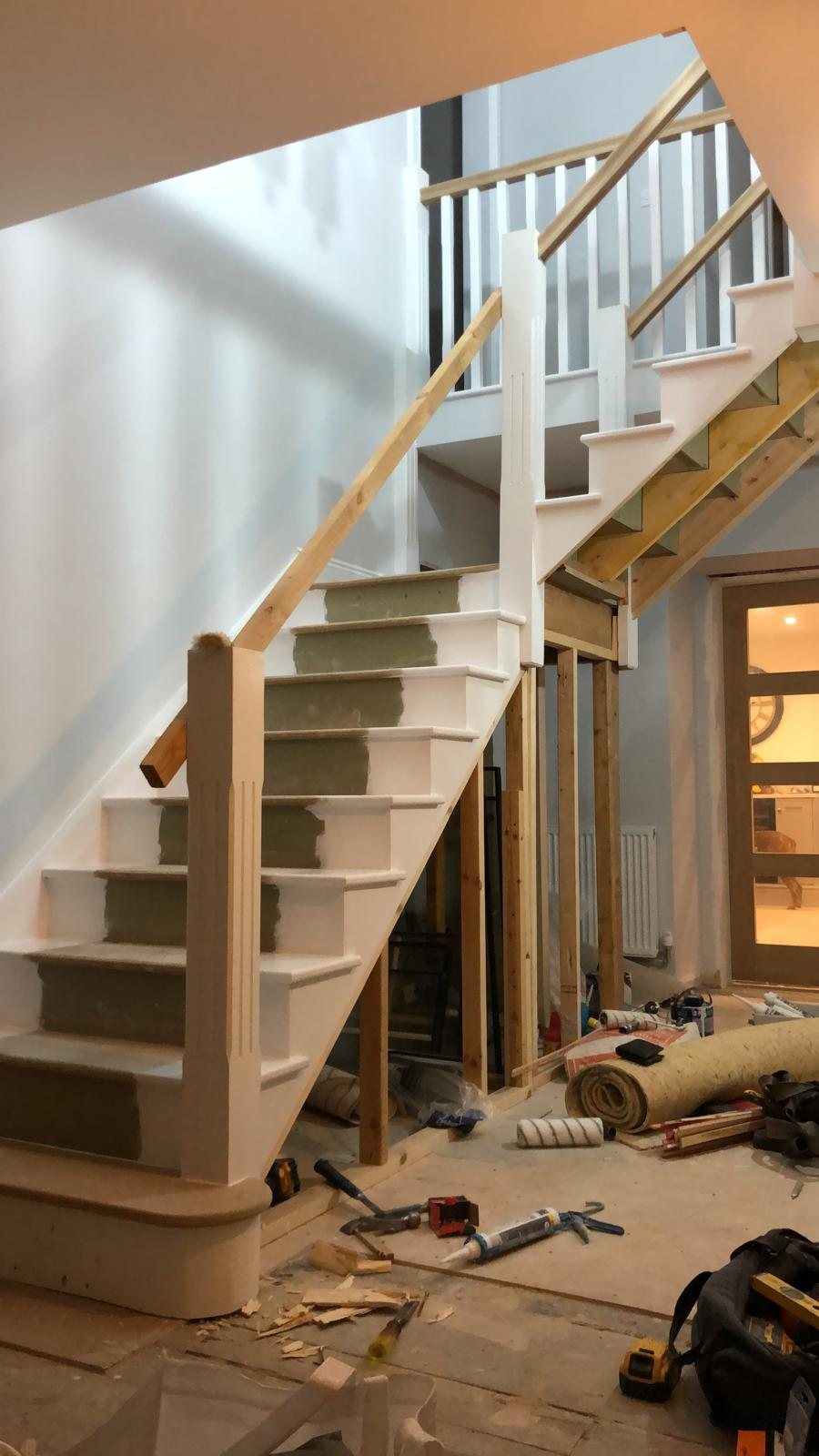
Bespoke joinery is timber work that is designed and made to measure for a specific space, rather than bought off the shelf in standard sizes. A joiner takes the exact dimensions of your room, selects the timber, and makes the piece to fit, usually in a workshop, before it is installed and finished on site. The word bespoke simply means made to order, and joinery is the craft of making things from wood, so bespoke joinery is custom timber made for one place and one purpose.
That covers far more than most people picture. Staircases, doors, fitted wardrobes, alcove units, kitchen cabinetry, window seats, wall panelling and timber windows are all joinery, and any of them can be bespoke. The difference between a bespoke piece and a mass produced one is not only how it looks. It is that a bespoke item is built to the actual space, in the timber you choose, using proper joints, which is why it fits where a standard unit cannot and lasts in a way flat pack rarely does. If your rooms are awkward, period, or simply not a standard shape, bespoke joinery is often the only way to use the space properly.
What counts as bespoke joinery
Joinery is a broad trade, and bespoke work runs right across it. Common examples include the following.
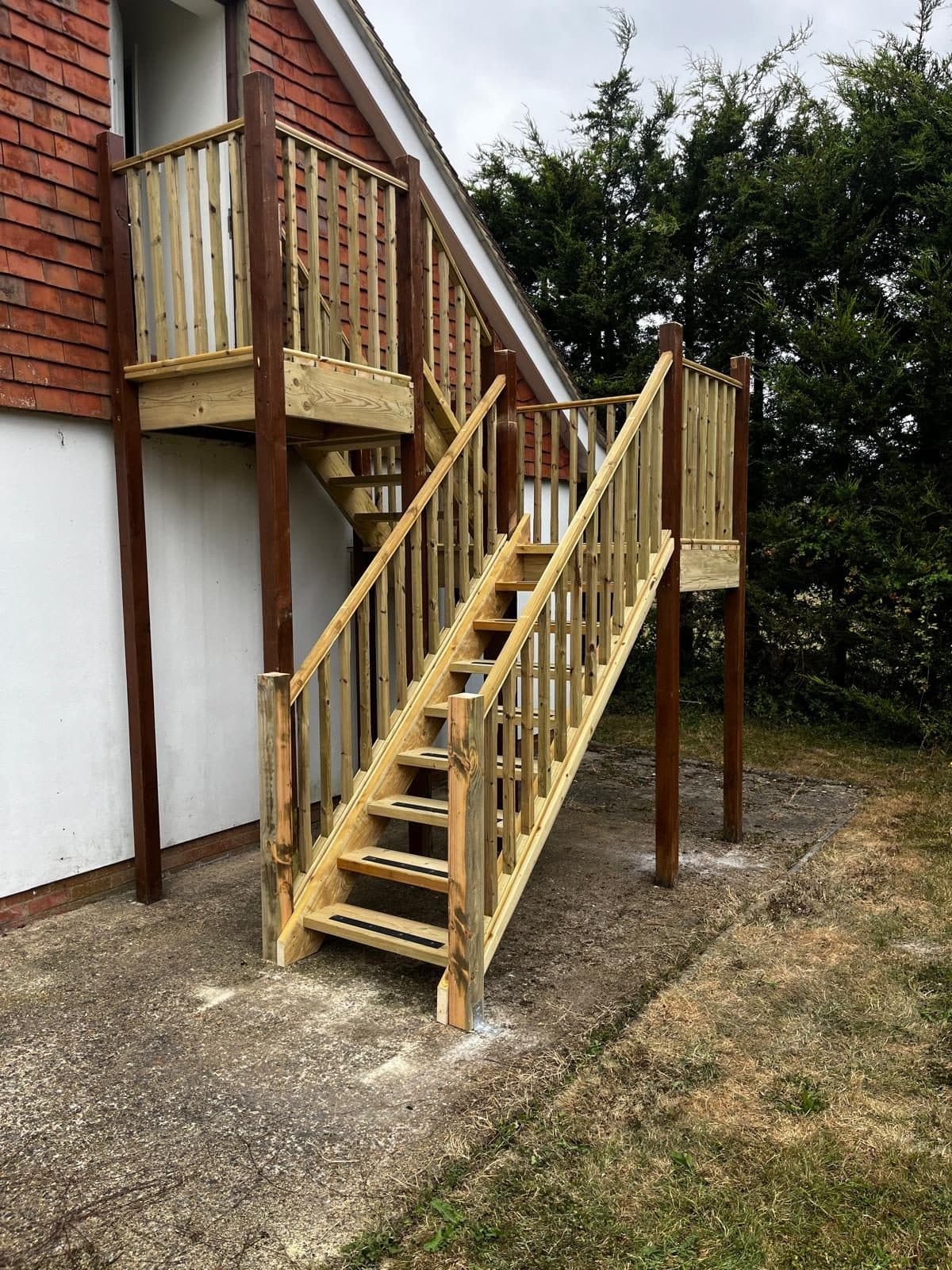
Staircases built to the exact rise and going of the opening, including strings, treads, handrails and balustrades
Internal and external doors made to the true size of the opening rather than a standard leaf
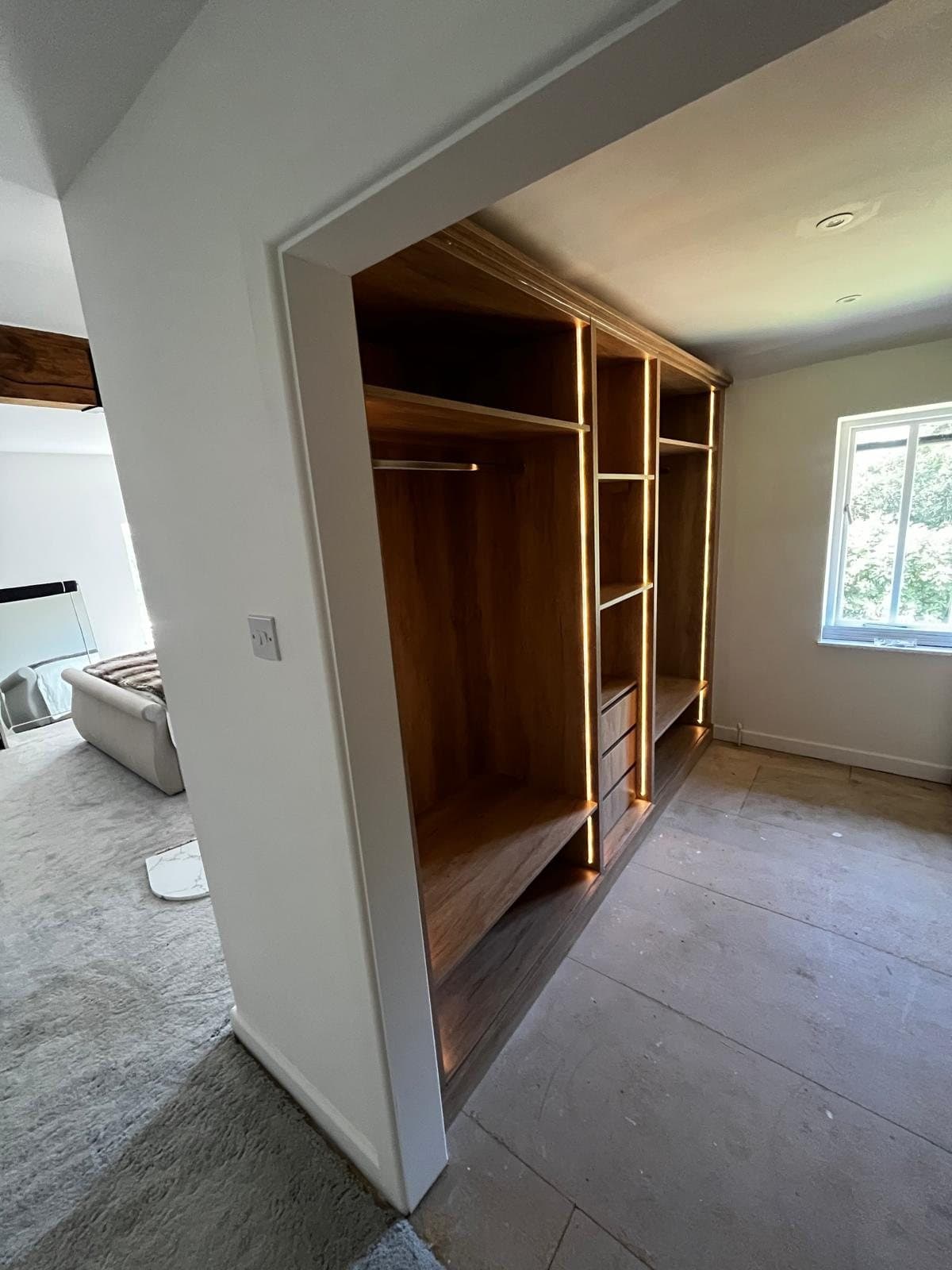
Fitted wardrobes, alcove cupboards, bookcases and window seats designed around the room
Kitchen cabinetry and freestanding furniture made to a specific design
Wall panelling, wainscoting and mouldings run to a chosen profile
Timber windows and frames, particularly for period and listed properties where standard units are not appropriate
This is the heart of the wider trade of carpentry and joinery, and the bespoke end of it is where the craft really shows, because every piece is set out from scratch for the place it will live.
How bespoke joinery is made
The process is what separates bespoke joinery from buying a unit in a box, and it follows a clear order.
It begins with a survey and a design, where the space is measured accurately and the piece is drawn to suit both the room and the way it will be used. Then comes material selection, choosing the timber or board to match the finish, the budget and the demands of the location. The bulk of the work happens in the workshop, where the components are machined and assembled using joints rather than relying on screws alone. Finally the piece is installed on site, where it is scribed to the walls and floor so it fits tight to surfaces that are rarely straight, and then finished.
That workshop stage matters more than most people realise. A conditioned workshop gives stable timber, accurate machinery and the control to cut proper joints, none of which exists on a dusty site, and it is the reason workshop made joinery holds its shape.
Bespoke joinery compared to off the shelf
The honest comparison comes down to a few real differences rather than marketing.
A bespoke piece fits the space exactly, uses the full height and depth available, and closes tight to uneven walls. An off the shelf unit is made to a standard size, so in an awkward recess you lose the leftover inches to filler panels. Bespoke work uses your choice of timber and proper jointing, which affects both how it looks and how long it lasts. It also gives you design freedom, so the piece matches the property rather than the catalogue.
The trade offs are equally honest. Bespoke joinery costs more than flat pack, and it takes longer, because it is made to order rather than pulled from stock. For a plain unit in a standard modern room, off the shelf is often the sensible choice. For anything awkward, period, or intended to last decades, bespoke usually earns the difference.
Choosing the right timber
Material choice is where experience shows most, because timber behaves differently depending on species and how it is used.
Hardwoods such as oak, ash and walnut are dense, durable and prized for their grain, which suits staircases, doors and furniture that will see wear and be seen. Softwoods are lighter and more affordable, and are often used where the piece will be painted. Engineered boards and MDF are stable and take a painted finish beautifully, which makes them ideal for large flat panels.
In our experience, using a stable board or MDF for large painted panels works better than using solid timber because solid timber moves with changes in humidity and opens fine cracks along the painted joints over time, whereas a stable board holds a flat, uninterrupted painted surface, so solid timber is best kept for the parts where its strength and grain actually earn their place. Knowing which material belongs where is the difference between joinery that still looks right in ten years and joinery that starts to show its seams in one.
When bespoke joinery is worth it
Bespoke joinery is worth it when a standard product cannot do the job, and that is more often than people expect.
From working with clients across Kent, we've found the strongest case is almost always the awkward or period property. Older Kent homes are full of chimney breasts, uneven walls, sloping ceilings and non standard openings, and these are exactly the situations where off the shelf furniture wastes space or simply will not fit. Matching existing features in a period home is another, since a new staircase or a run of panelling has to sit alongside original detail without looking out of place. And for a statement piece, a fine staircase or a handmade kitchen, bespoke is the only route to the result.
Much bespoke joinery is commissioned as part of a wider renovation or a new kitchen, which is often the natural moment to have it made, since the design can be planned into the whole scheme rather than added afterwards. It sits alongside the more decorative end of the trade too, where custom carpentry turns an ordinary room into something specific to the house and the owner.
What experience changes about bespoke joinery
Across 30 years in carpentry and joinery, the clearest lesson is that good bespoke work is decided long before anything is cut, in the setting out and the material choice, not in the flourish at the end.
The formal side of the trade reflects this. The recognised route into the craft is the architectural joiner pathway of the Carpentry and Joinery apprenticeship, which is built around setting out and machining timber to fine tolerances in a workshop. That grounding is what a homeowner is really paying for in a bespoke piece, because accurate setting out on an uneven room is the skill that makes a unit close tight to the wall rather than leave a gap.
The other consistent pattern is that the cheapest bespoke quote and the best one are rarely the same. One has specified the right timber for each part, proper joints and an accurate survey, and the other has cut corners that will not show on delivery day but will show within a year or two. Bespoke joinery is only worth commissioning if it is done properly, because a poorly made bespoke piece offers none of the advantages you paid for over a standard one.
The short answer
Bespoke joinery is custom timber work, designed and made to measure for a specific space and made in a workshop before being fitted and finished on site. It covers staircases, doors, fitted furniture, cabinetry, panelling and windows, and it differs from off the shelf work in its fit, its materials, its joints and its longevity. It costs more and takes longer than flat pack, and it is worth it when a standard product cannot fit the space or match the property, which in older Kent homes is very often the case.
If you are considering bespoke joinery in Kent, AGC Carpentry & Building Services designs and makes fitted and freestanding timber work to suit the property, across Ashford, Maidstone, Canterbury, Sevenoaks, Folkestone, Hythe and Dover. You can see recent projects on our work page or follow us on Instagram, and get a quote when you are ready to talk it through.