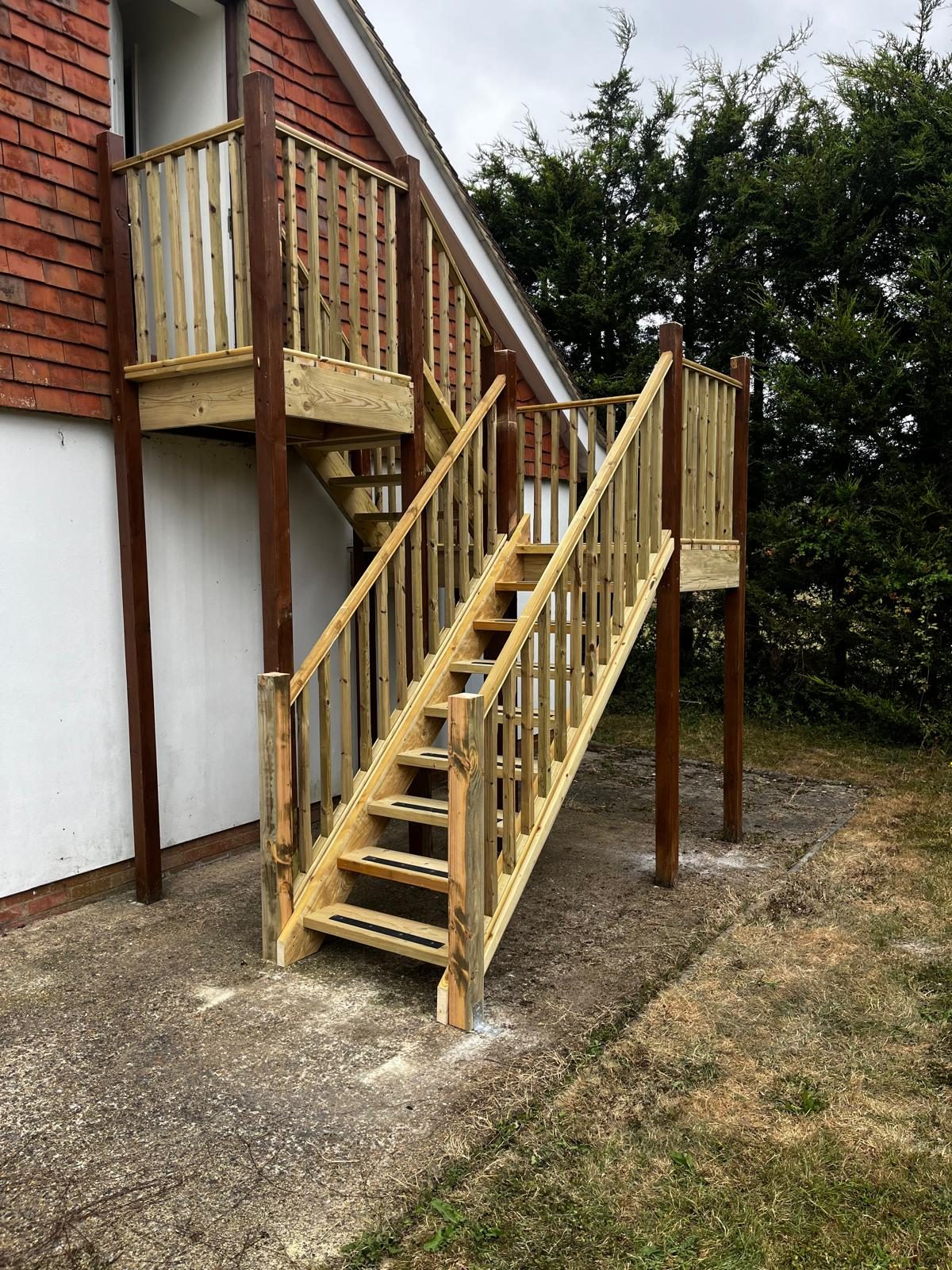
The difference between carpentry and joinery comes down to where the work happens and whether something is being made or fitted. A joiner works mainly in a workshop, making timber components from scratch, including doors, windows, staircases, fitted units and bespoke furniture. A carpenter works mainly on site, building the timber structure of a property and installing components once they arrive. The old trade shorthand still holds. A joiner makes it, a carpenter fits it.
The distinction matters far less than most people expect when they come to hire someone. In the UK, both trades sit under a single recognised qualification, the Carpentry and Joinery Level 2 apprenticeship, which splits into a Site Carpenter pathway and an Architectural Joiner pathway. The standard itself describes joinery being produced in a workshop and then transported to site to be installed by carpenters. The two trades were built to work together, and most experienced tradespeople in Kent carry skills across both, which is why so many describe themselves as a carpenter and joiner. If you are trying to work out who to call, describe the job rather than naming the trade.
Joiners make things in a workshop
Joinery is bench work. A joiner sets out and marks out timber, machines it, and assembles components using joints such as mortise and tenon, dovetail and housing joints, rather than relying on nails and screws to hold a piece together. The name is literal. Joinery is the craft of joining wood.
Typical joinery includes the following.
- Internal and external doors
- Timber windows and frames
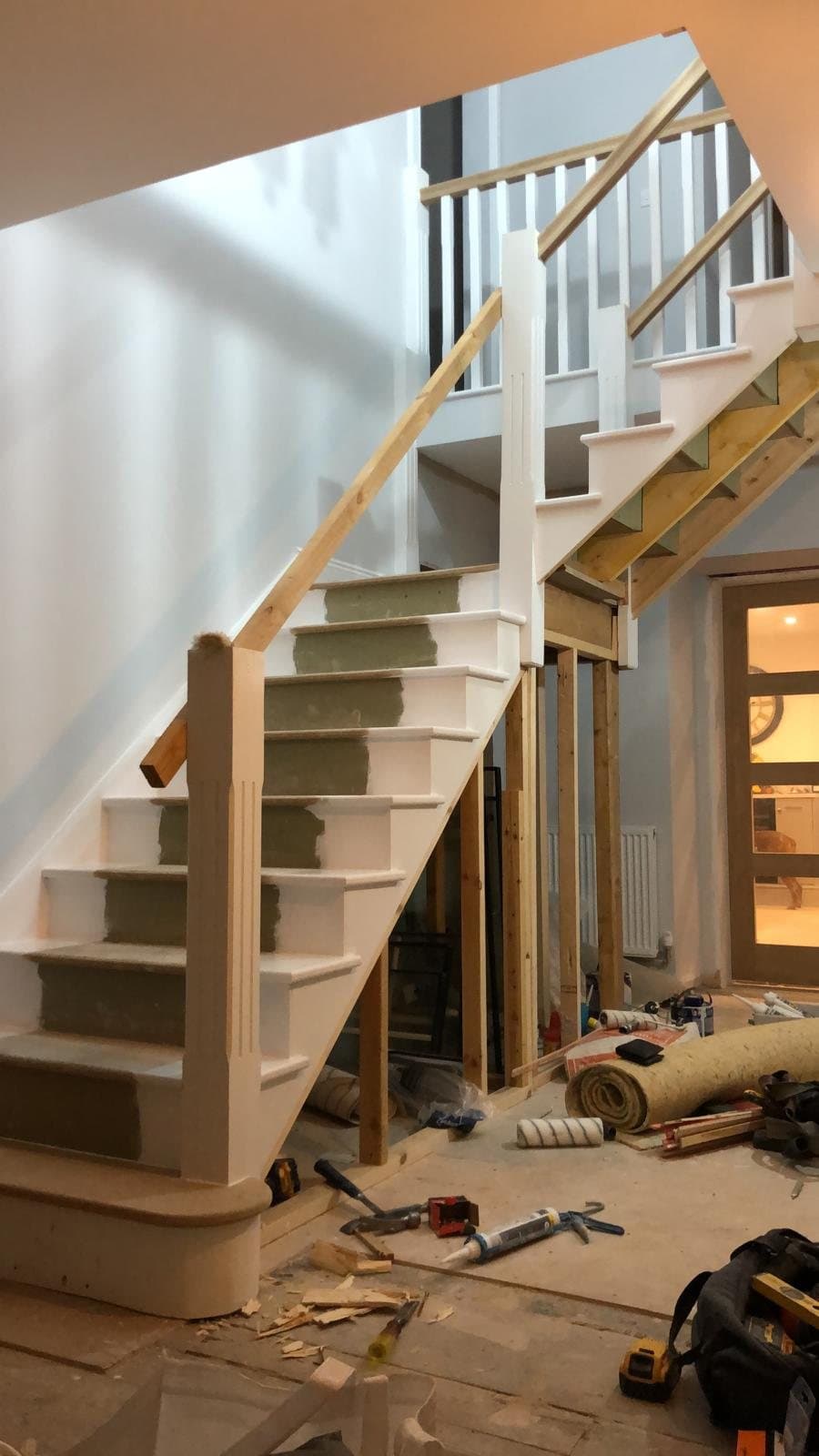
- Staircases, including strings, treads, risers and handrails
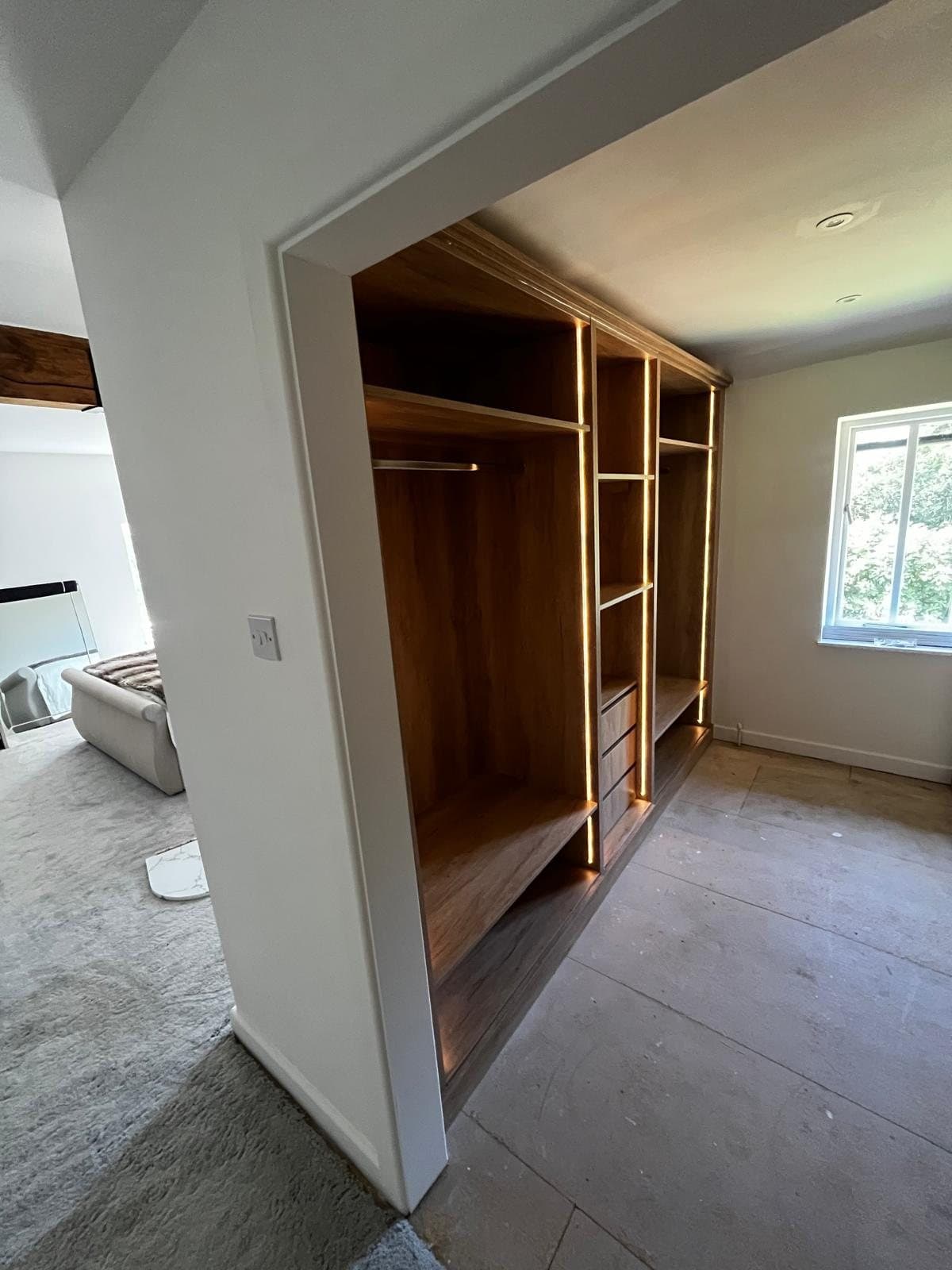
- Fitted wardrobes, bookcases and bespoke furniture
- Kitchen units and cabinetry
- Skirting, architrave and mouldings run to a specific profile
The workshop matters more than most homeowners realise. It gives a joiner conditioned timber, fixed machinery set to fine tolerances, and proper extraction. None of that exists in the middle of someone’s hallway.
In our experience, a workshop-made staircase works better than one cut and assembled in place because the strings can be trenched to a consistent depth on a bench, the timber arrives at a stable moisture content, and the flight goes together exactly as it was set out. A staircase built in situ from site-stored timber is the one that starts creaking eighteen months later, once everything has moved and the wedges have loosened. The same principle applies to almost anything with a repeated joint in it.
Carpenters fit things on site
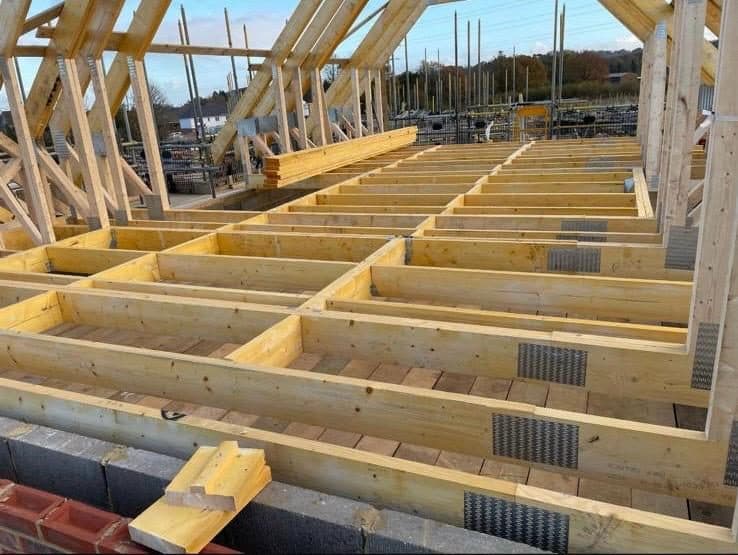
Carpentry covers far more of a build than most people assume. A carpenter handles the structural timber, meaning floor joists, stud partitions and roof structures, whether cut on site or trussed, and then everything that gets fixed in place afterwards.
The work splits into two stages. First fix carpentry happens before the walls are closed up and covers joists, studwork, roof, door linings and noggins for later fixings. Second fix happens after plastering and covers hanging doors, skirting and architrave, ironmongery, and the installation of the joinery items themselves.
Here is the real difference in skill. A joiner works to a drawing on a bench. A carpenter works to a building that already exists, with every irregularity it has picked up over the years. Scribing, packing and adjusting are the job.
From working with clients across Ashford, Canterbury and Sevenoaks, we’ve found this is exactly where Kent’s older housing stock separates good carpentry from average carpentry. Openings in period properties are rarely square, floors are rarely level, and walls are rarely plumb. A beautifully made workshop door counts for nothing if the person hanging it cannot read a twisted frame and adjust for it.
Why the two terms get mixed up
There are two reasons, and neither is about skill.
Regional language. “Joiner” is the standard term across Scotland and the north of England. “Carpenter” is more common in the south, including Kent. The same person doing the same work would be called different things in Newcastle and in Ashford, so the word often tells you where someone trained rather than what they do.
Overlap in practice. Very few tradespeople stay purely on one side of the line. A carpenter who builds a set of fitted shelves has done joinery. A joiner who fits their own staircase has done carpentry. On smaller domestic jobs, one person routinely does both in the same week.
What the qualifications actually tell you
The formal route is a core-and-options apprenticeship. Apprentices take either the Site Carpenter or the Architectural Joiner pathway and complete an NVQ Level 2 Diploma in Wood Occupations in that route. Completion meets the CSCS Skilled Worker standard, and there is a Level 3 Advanced Carpentry and Joinery qualification beyond it.
This is worth knowing when you hire, because it confirms the split is a recognised specialism rather than marketing language. Someone who trained as an architectural joiner has spent their apprenticeship setting out and machining. Someone who trained as a site carpenter has spent theirs erecting roofs and fixing components in place. Both are skilled. They are not automatically interchangeable on your particular job.
Which one do you actually need?
A quick way to decide.
- Something made to measure that does not exist yet. That is joinery. Bespoke wardrobes, a replacement sash window, a one-off staircase.
- Something structural, or something being installed. That is carpentry. Roof work, studwork, floors, door hanging and kitchen fitting.
- Both. That covers most real projects, including nearly every extension and renovation.
The more useful question is usually about scope rather than trade. If the work touches walls, floors or structure, you are into building work. Whether that means hiring a joiner rather than a general builder, or the reverse, depends on how much of the job is bespoke timber and how much is construction.
How the two come together on a real project
Across 30 years in carpentry and building, including 12 years project managing multimillion-pound contracts before founding AGC, the pattern has been consistent. On one £1.6 million project delivered across three phases of new builds, the division was unmistakable. Site carpenters erected structure while joinery packages were still being machined in a workshop miles away, arriving on a fixed date.
The delays on that job never came from either trade being slow. They came from the handover between them. If the carpenter forms an opening a few millimetres off what the joiner set out to, the component does not fit, and someone loses a week waiting for a remake. This is why we take critical dimensions from the opening as built rather than from the drawing. On Kent’s older properties the two almost never match, and the drawing is not the thing the door has to fit into.
That coordination is the part homeowners rarely see, and it is the part that decides whether a project runs to time.
The short answer
A joiner makes timber components in a workshop. A carpenter builds with timber and installs those components on site. In the UK they share one qualification with two pathways, the terms vary by region, and in domestic work the same tradesperson frequently does both. What matters when hiring is not the label. It is whether they have done your specific type of work, on your specific type of property, before.
If you are planning work across Kent and are not sure which you need, it is quicker to describe the job than to name the trade. AGC Carpentry & Builders covers both sides, from structural first fix through to bespoke fitted work, across Ashford, Maidstone, Canterbury, Sevenoaks, Folkestone, Hythe and Dover. You can see recent projects on our work page or follow us on Instagram, and get a quote whenever you are ready to talk it through.